AI Dental Receptionist vs Human Receptionists: 2026 Guide
AI dental receptionist vs human receptionists: compare cost, availability, scalability, and patient experience to find the right setup for your practice.
Share:
Table of contents
Choosing between an AI dental receptionist vs human receptionists is one of the most practical front desk decisions a practice owner makes. In many dental practices, the front desk is the hub of patient communication. Phones ring while staff greet patients. Scheduling overlaps with check-in procedures. After hours, urgent calls go to voicemail and often do not get a timely response. (See why dental voicemail loses patients and what to use instead.) These operational patterns affect appointment conversion, patient trust, and staff workload.
Choosing between an AI dental receptionist system and traditional human receptionists is a major decision for practice owners. This article compares AI dental receptionist vs human receptionists across key operational dimensions and outlines practical criteria to help you determine the right approach for your practice.
What Is AI Dental Receptionist Software
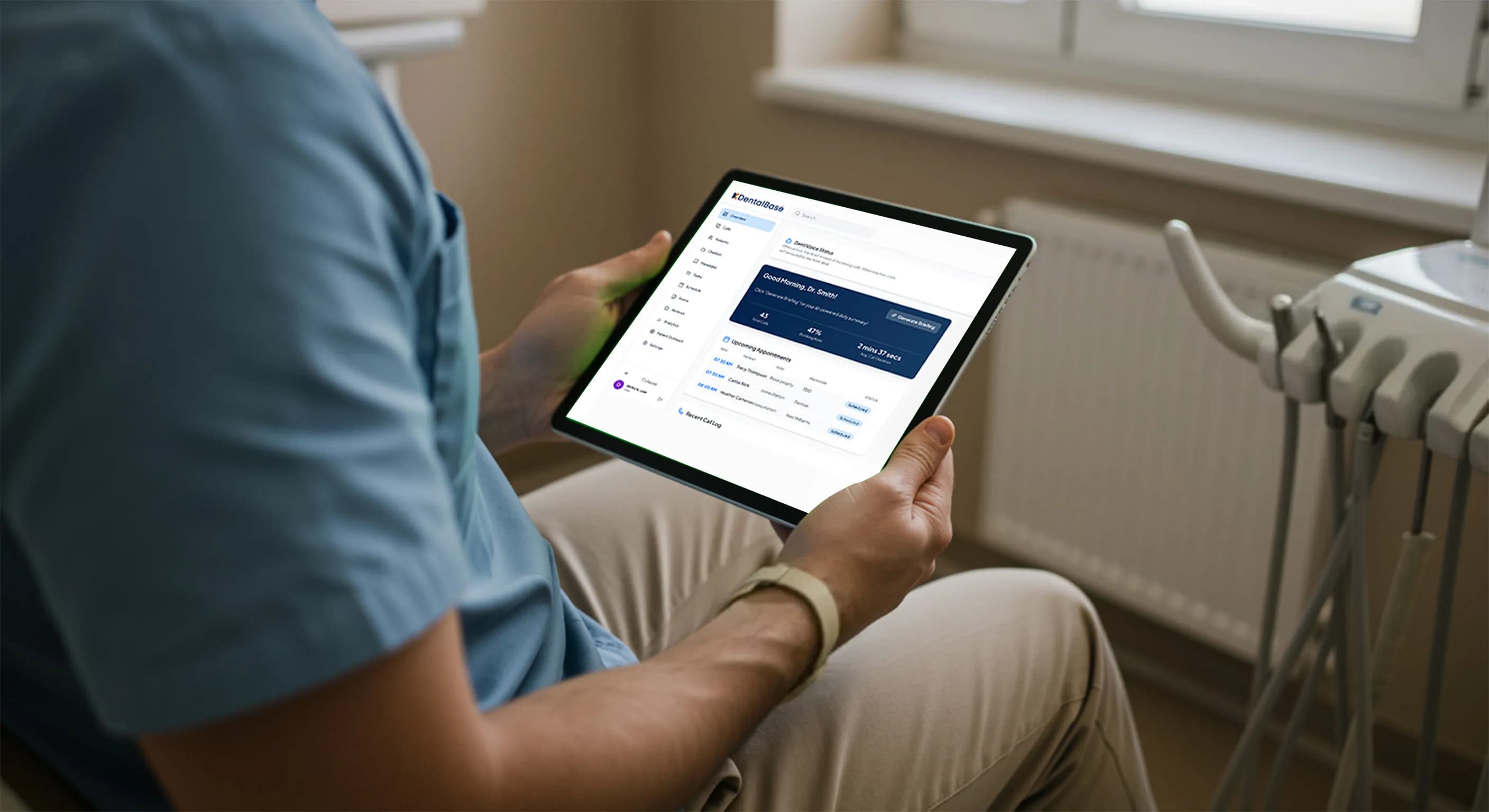
AI dental receptionist software is a system designed to automate routine front desk communication using practice-defined rules. It answers the phone, follows the scripts your team sets, and passes anything unusual to a person. The practice decides which calls it takes and which always reach staff.
Typical functions include:
-
Answering patient calls at any time
-
Capturing appointment requests
-
Responding to common questions
-
Routing urgent or complex calls to staff
One example of this category is Dentivoice, which is designed to support dental workflows while allowing practices to control how and when automation is applied.
Interest in front desk automation tracks a staffing problem. In a late-2024 ADA Health Policy Institute poll, about 62% of dentists named staffing shortages the single biggest challenge facing their practices in 2025. HPI data also shows only 60% of dentists have an adequate number of hygienists on staff, which pushes administrative work onto whoever is free. Software does not fix hiring. It does absorb the calls that arrive when nobody is free to answer. That shortage shows up on the phone first, and the ripple effect of staffing gaps on patient calls and reminders explains how it wears down patient trust.
The Role of Human Receptionists in Dental Practices
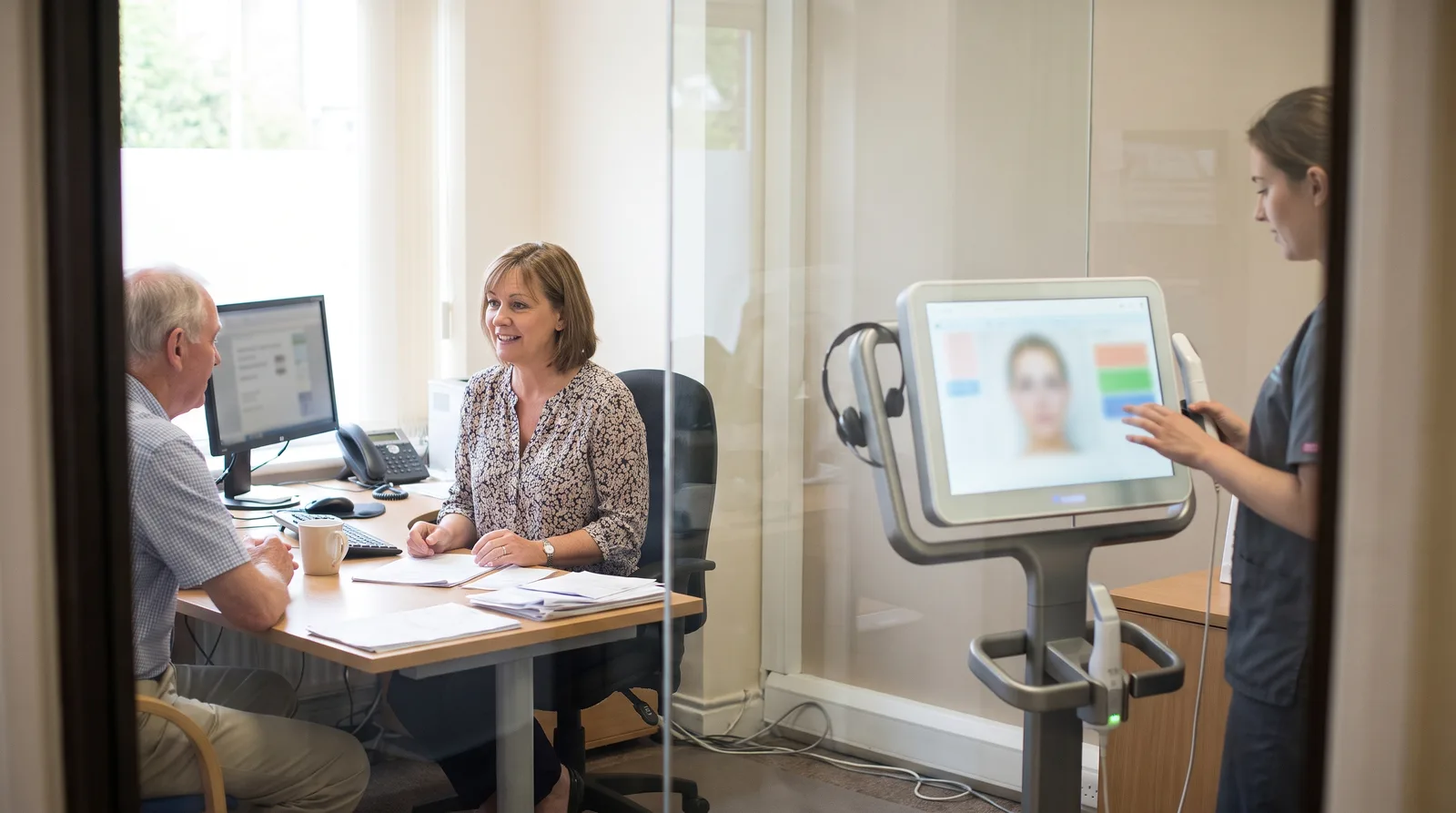
Human receptionists are responsible for answering phones, greeting patients, managing schedules, handling insurance or billing questions, and providing interpersonal support. Industry bodies such as the American Dental Association publish guidance on front desk and practice operations.
They bring contextual judgment, empathy, and adaptability to patient interactions. These qualities are especially valuable for complex situations, sensitive conversations, and in-office coordination.
However, human receptionists are limited by availability, call capacity, and staffing constraints.
Hiring to cover those constraints is slow. Among dentists actively recruiting a hygienist, 91% told the ADA Health Policy Institute it was very or extremely challenging. For dental assistants, the share calling recruitment very or extremely challenging fell from roughly 87% in late 2022 to just over 70% by the end of 2024, so conditions are easing without being easy. A front desk vacancy tends to stay open, and the phone keeps ringing while it does. Coverage has to come from somewhere in the meantime.
AI Dental Receptionist vs Human Receptionists: Practical Comparison
The differences between AI dental receptionists and human receptionists become clearer when comparing how each handles daily front desk demands. The table below sets an AI dental receptionist and human receptionists side by side across availability, call capacity, cost, and the kinds of conversations each one suits.
| Evaluation Area | AI Dental Receptionist | Human Receptionists |
|---|---|---|
| Availability | Operates 24/7, including nights and weekends | Limited to scheduled business hours |
| Call Volume Handling | Can manage multiple calls simultaneously | Handles one call at a time |
| After-Hours Coverage | Answers calls and captures patient intent | Calls typically go to voicemail |
| Consistency of Responses | Delivers consistent, rule-based answers | Responses may vary by staff member |
| Cognitive Load on Staff | Reduces interruptions and task switching | Requires constant multitasking |
| Scalability | Scales without adding staff | Requires additional hires |
| Cost Structure | Predictable software cost | Salary, benefits, turnover |
| Training and Turnover | No onboarding cycles | Requires ongoing training |
| Complex or Emotional Situations | Escalates to staff | Handled directly |
| Role in the Practice | Supports and augments staff | Primary patient contact |
Many practices ultimately adopt a hybrid model that combines both approaches. If you are weighing staffing options, compare the three main dental phone coverage models side by side.
How Do Costs Compare for AI and Human Receptionists?
On cost, AI dental receptionists run on a predictable monthly software fee, while human receptionists carry salary, benefits, training, and turnover. Most practices find AI stabilizes administrative spend and adds coverage without the variable expense of extra hires during busy periods.
AI dental receptionists operate on predictable software costs without overtime, sick leave, or turnover considerations. This can help practices stabilize administrative expenses while improving coverage.
Human receptionists require ongoing investment in hiring, training, and scheduling. During peak periods, additional staff may be needed to manage call volume, increasing labor costs. Either way, the bigger expense is often the unanswered phone: see the true cost of missed dental calls.
Availability and Scalability
For availability, AI handles unlimited simultaneous calls around the clock, while a human receptionist takes one call at a time during set hours. As call volume grows, AI scales instantly, whereas human coverage requires adding staff or accepting longer hold times.
AI systems provide continuous availability and can handle multiple calls at once. This reduces missed calls during high-volume periods and outside business hours.
Human receptionists are constrained by schedules and call capacity. When volume spikes, wait times increase and interruptions become more frequent. Over months, those interruptions add up to the kind of front desk burnout that drives resignations, which is a retention problem as much as a coverage one.
Patient Experience and Communication Consistency
On patient experience, AI delivers consistent, accurate answers to routine questions every time, while human receptionists bring empathy and judgment to sensitive moments. The strongest practices use AI for predictable calls and reserve staff for conversations that need a personal touch.
AI dental receptionists provide consistent responses to routine questions such as office hours, appointment requests, and general service information. This predictability can reduce confusion and improve response time. Consumer research from BrightLocal consistently shows callers expect fast, direct answers from local businesses.
Human receptionists add value through empathy, relationship building, and adaptive communication, which remain important for complex or sensitive interactions. Clear communication also supports preventive follow-up, an area the CDC oral health program emphasizes for patient outcomes.
What Owners Should Evaluate Before Deciding
Before deciding between AI and human-only reception, owners should weigh how often calls are missed, how disruptive the phone is during clinical hours, and how variable daily volume is. These factors point toward automation, added staffing, or a blended model.
When choosing between AI support and relying solely on human receptionists, practice owners should consider:
-
Frequency of missed or after-hours calls
-
Front desk interruption levels during clinical hours
-
Variability in daily call volume
-
Need for consistent messaging versus personalized handling
These factors help determine whether automation, human staffing, or a hybrid model fits the practice.
Answering those points takes numbers, not impressions. A short audit works:
- Pull two weeks of call logs from your phone system.
- Separate answered calls from voicemail and abandoned calls.
- Mark which unanswered calls arrived outside business hours.
- Count how many of those callers ever tried again.
That last count usually settles the decision. In a September 2025 CallRail survey of 1,000 US consumers, 78% said they had abandoned a business after an unanswered call and 82% said they would call a competitor instead. Patients rarely queue.
How AI and Human Receptionists Work Together
AI and human receptionists work together by dividing the call load: AI covers routine, high-volume, and after-hours calls, while staff focus on in-office patients and complex conversations. This pairing improves responsiveness and eases front desk strain without adding headcount.
In many practices, AI dental receptionists handle routine, high-volume, or after-hours calls, while human staff focus on in-office patients and complex interactions.
This division of labor can improve responsiveness, reduce administrative strain, and support growth without proportionally increasing staffing levels.
The split also protects first impressions. BrightLocal's 2026 Local Consumer Review Survey of 1,002 US adults found 97% of consumers read reviews before choosing a local business. Complaints about a phone nobody answers sit in those reviews permanently. Routine calls picked up on the first ring rarely generate them.
Which Setup Is Right for a Solo, Group, or DSO Practice?
The right balance between AI and human reception usually depends on practice size, call volume, and how often the phone goes unanswered. A solo office with one front desk person feels missed calls differently than a multi-location group fielding hundreds of calls a day.
If you run a single-chair or small office, the AI receptionist sizing guide for solo practices walks through how to scope coverage without overbuying. Larger organizations often start by reviewing their most common dental call types to decide which calls to automate first.
What Practices Typically Notice First
In the first weeks, practices rarely see dramatic change. The earliest wins are operational: fewer calls dropping to voicemail, fewer front desk interruptions during clinical hours, and after-hours messages that arrive organized and ready for same-day follow-up.
In early adoption, most practices do not see dramatic changes overnight. Instead, owners often notice:
-
Fewer missed calls during peak hours
-
Reduced front desk interruptions
-
Clearer after-hours messages ready for follow-up
-
More predictable call handling
These changes tend to stabilize workflows before affecting overall volume or staffing decisions.
Change Management and Adoption Considerations
Adoption usually works in phases. Most practices start AI with after-hours or routine calls, confirm it fits their workflows, then widen coverage. A gradual rollout protects existing routines, builds staff confidence, and keeps the line between automation and human handling clear.
Most practices introduce AI receptionist support gradually. Initial use often focuses on after-hours calls or routine inquiries before expanding coverage.
This phased approach allows staff to adapt, preserves existing workflows, and reduces resistance by clearly defining boundaries between automation and human responsibility.
How Do You Measure Whether the Switch Is Working?
Once AI handles part of the call load, owners want proof it is helping. The clearest signals are operational: fewer calls hitting voicemail, shorter front desk interruptions, and after-hours messages that arrive ready for follow-up. Tracking a small set of metrics over a few weeks shows whether coverage is actually improving.
For a deeper framework, see how to approach dental call analytics and the metrics that drive revenue, and the broader question of whether AI can realistically replace a dental receptionist.
Ready to See How AI Reception Fits Your Practice
If your practice experiences missed calls, after-hours gaps, or front desk overload, the next step is evaluating how AI call handling would work with your real workflows.
Request a Dentivoice demo to walk through call flows, escalation rules, and after-hours handling based on how your front desk currently operates. This allows you to assess fit before making any changes to staff or systems.
Request a Dentivoice demo to see how it would work in your practice.
Frequently Asked Questions
Yes. AI dental receptionists typically handle routine calls like scheduling requests or office hours, then transfer you to a real staff member if your question is complex or urgent. Most practices use AI as a first point of contact, not a replacement for human staff.
In many cases, it speeds things up. AI systems can answer calls 24/7 and capture appointment requests immediately, even after hours, instead of sending you to voicemail and waiting for a callback.
Reputable AI dental receptionist platforms are designed to support secure handling of patient communications and integrate safely with dental practice software. Offices should only use systems designed for healthcare environments.
Sometimes, but many patients report that speed and clarity matter more than whether the system is automated. Modern AI receptionists use conversational language and are designed to get you the right help quickly.
AI dental receptionist software usually costs a predictable monthly fee, while a human receptionist adds salary, benefits, and turnover costs. Many practices use AI to extend coverage affordably rather than to cut existing staff.
Dental receptionist AI answers in your practice voice, identifies why the patient is calling, books or reschedules the appointment, and routes true emergencies to a person. The dental receptionist AI logs every call so nothing falls through after hours.
Yes. Most AI dental receptionist platforms integrate with common practice management systems, so the assistant can check real availability and book appointments directly rather than leaving a message for staff to process later.
Sources & References
- 1
- 2
- 3
- 4
- 5
Topics
Was this article helpful?
Written by
DentalBase Team
Expert dental industry content from the DentalBase team. We provide insights on practice management, marketing, compliance, and growth strategies for dental professionals.