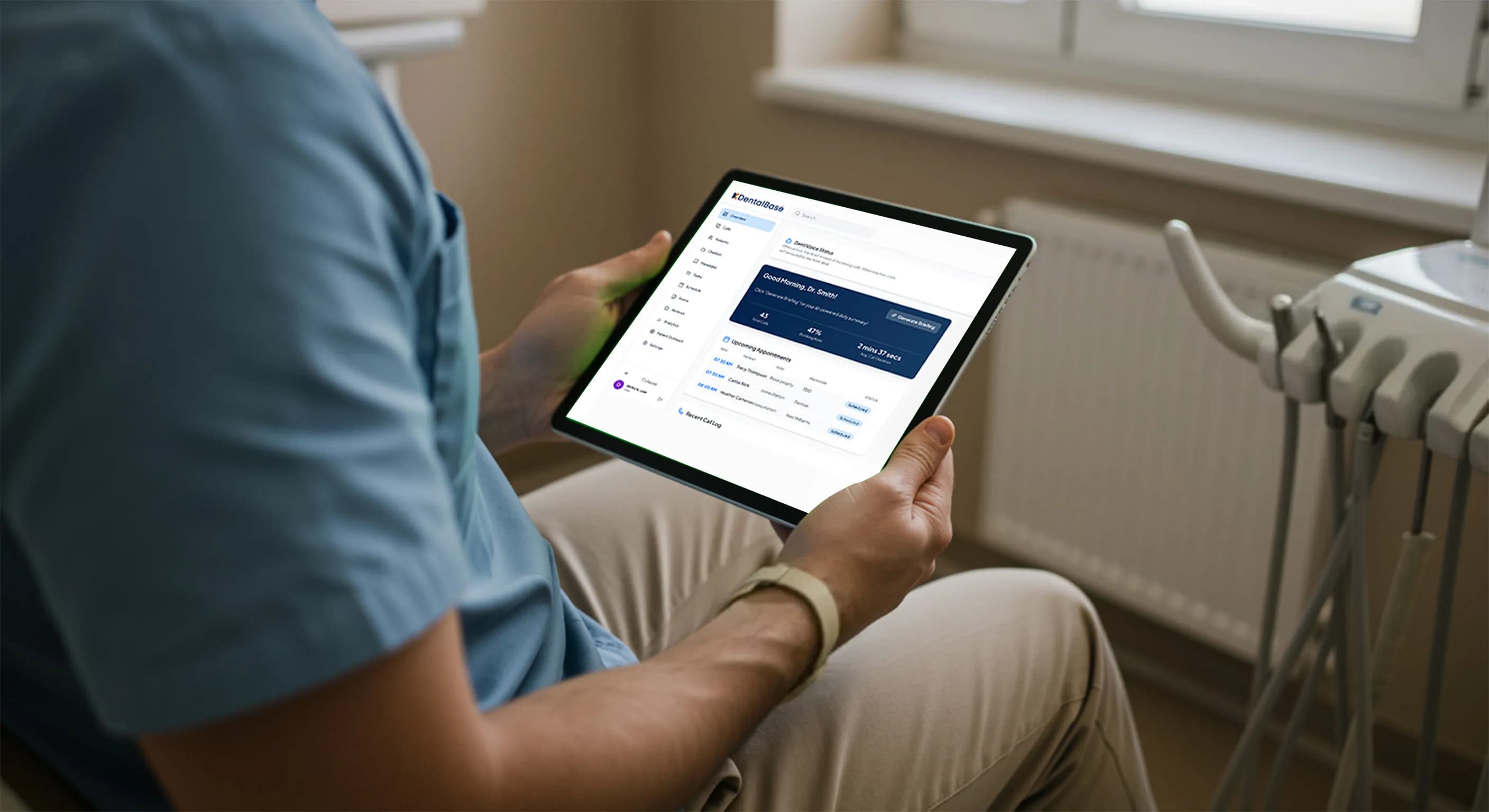
AI Patient Communication Platforms for Dentistry

Learn what AI patient communication platforms are, how dental practices use them, and how they improve calls, scheduling, and patient engagement.
Share:
Table of contents
What is an AI patient communication platform?
An AI patient communication platform for dentistry is a system that uses artificial intelligence to manage and support communication between a dental practice and its patients. These platforms assist with handling inbound calls, responding to messages, sending appointment reminders, and capturing scheduling requests across multiple communication channels, helping practices remain responsive and organized.
In practice, many dental offices use an AI dental receptionist to answer patient calls, capture appointment requests, and respond to common questions.
Why patient communication is a challenge in dental practices
Patient communication sits at the center of dental practice operations. Every new appointment, emergency inquiry, reschedule request, or follow-up question begins with a conversation. Despite its importance, many dental practices struggle to manage communication effectively due to operational constraints rather than lack of effort.
Common challenges include:
• High inbound call volume during peak clinical hours
• Limited front desk staffing
• Competing priorities between in-office patients and phone inquiries
• After-hours calls going unanswered
• Messages spread across phone, text, and email
When communication gaps occur, practices may experience lost new patient opportunities, lower booking rates, increased no-shows, and higher stress levels for front desk staff. Over time, these issues can impact both revenue and patient satisfaction.
The financial weight of these gaps is easy to underestimate. A single unanswered new-patient call can represent thousands of dollars in lifetime treatment value, and most callers will not leave a voicemail before dialing the next practice on their list. This is why a phone line that is always busy or a front desk stretched too thin quietly erodes growth long before it shows up in production reports. The pattern usually compounds: missed calls during a packed clinical morning turn into a backlog of voicemails, which turn into delayed callbacks, which turn into patients who have already booked elsewhere.
Recognizing the early warning signs matters more than reacting to the symptoms. When the team is constantly choosing between the patient in the chair and the phone that will not stop ringing, communication quality drops for everyone. Many offices first notice the strain through front desk overwhelm rather than through hard metrics, which is exactly why a structured way to measure call handling becomes valuable.
What AI patient communication platforms do
AI patient communication platforms are designed to support dental teams by handling routine, repetitive, and time-sensitive interactions. These systems typically operate continuously and follow predefined workflows tailored to dental practices.
Common capabilities include:
• Answering inbound patient calls
• Responding to frequently asked questions
• Capturing appointment requests and patient details
• Sending confirmations, reminders, and notifications
• Logging and organizing patient communication
By automating these tasks, practices reduce reliance on manual processes while ensuring that patient inquiries receive timely responses.
How an inbound patient request moves through the platform
The escalation step is what separates a useful platform from a blunt auto-attendant. Routine requests are resolved on the spot, while clinical or sensitive situations are handed to a person with full context. This same logic underpins how AI triages urgent versus routine calls, so an emergency never sits in a queue behind a routine reschedule.
Benefits for dental practices
When implemented correctly, AI-based communication platforms provide operational support without replacing human staff. The goal is consistency and availability, not removing personal interaction.
Key benefits include:
• Fewer missed calls and unanswered inquiries
• Faster response times for patients
• Improved appointment attendance through reminders
• Reduced administrative workload for front desk teams
• Better visibility into patient communication activity
These benefits help practices maintain responsiveness during busy periods and ensure continuity when staff are unavailable.
For a closer look at where these systems still fall short, AI in patient communication: benefits and limits for practices covers both sides in detail.
Reminders deserve particular attention because they touch revenue directly. A reminder that actually reaches the patient, on the channel they prefer, is the difference between a confirmed chair and an empty one. Practices that move from manual callbacks to automated recall reminders patients answer tend to recover hygiene slots that would otherwise quietly disappear, and structured appointment confirmations keep the daily schedule predictable.
Common approaches to managing patient communication
Dental practices typically rely on a combination of approaches to manage patient communication. Each option has advantages and limitations depending on practice size, staffing, and call volume.
| Approach | Availability | Staff Effort | Consistency |
|---|---|---|---|
| Manual front desk handling | Business hours only | High | Variable |
| Voicemail systems | 24/7 | Low | Low |
| Outsourced call centers | Extended hours | Medium | Medium |
| AI communication platforms | 24/7 | Low | High |
Manual handling offers a personal touch but is limited by staff capacity. Voicemail provides basic coverage but often fails to convert inquiries into appointments. Call centers extend availability but may lack familiarity with specific dental workflows. AI platforms prioritize responsiveness and consistency across channels.
Where AI dental receptionists fit
An AI dental receptionist is a specialized type of AI communication platform built specifically for dental practice workflows. It focuses on handling inbound calls and messages, collecting structured patient information, and supporting appointment scheduling while escalating complex or sensitive situations to human staff.
This model allows practices to extend communication coverage without increasing front desk overload. Rather than replacing team members, AI receptionists act as an operational layer that absorbs overflow and after-hours demand.
Use cases where AI communication platforms are most effective
AI patient communication platforms tend to deliver the most value in practices experiencing growth or operational strain.
Common scenarios include:
• High call volume during peak clinical hours
• Frequent after-hours patient inquiries
• Front desk teams managing multiple responsibilities
• Multi-location practices coordinating communication
• Practices aiming to reduce missed appointment opportunities
In these situations, automation helps ensure that patient interactions remain consistent and timely, regardless of staffing levels or time of day.
How is an AI patient communication platform different from a traditional answering service?
An AI patient communication platform differs from a traditional answering service in three ways: it understands dental-specific requests, it can take action inside your scheduling workflow, and it works around the clock at a consistent cost. An answering service typically takes a message and forwards it; an AI platform can confirm an appointment, answer an insurance question, and log the interaction without a callback.
The distinction matters most at the point of conversion. A message sitting in an inbox until morning is a delayed response, and delayed responses lose patients. For a deeper side-by-side, the comparison of an AI receptionist versus a traditional receptionist and the leading dental AI voice platforms in 2026 outline where each model fits.
The practical test: if a patient calls at 7:30 p.m. to reschedule, does the request get resolved tonight, or does it become tomorrow’s callback? AI platforms aim for the former; message-only services default to the latter.
What should dental practices look for when choosing a platform?
Dental practices should prioritize integration with their practice management software, healthcare-grade data security, dental-specific call handling, and clear rules for escalating to a human. A platform that books directly into your calendar and respects clinical boundaries delivers far more value than a generic voice bot bolted onto the phone line.
For a structured way to compare vendors against your own priorities, the dental patient communication software buyer guide walks through the same criteria in detail.
Considerations before adopting AI communication tools
Before implementing an AI-based communication platform, dental practices should assess operational readiness and workflow compatibility. Important considerations include integration with existing practice management software, data security standards, and clear escalation rules for clinical or sensitive inquiries.
Proper configuration, monitoring, and periodic review are essential to maintaining accuracy and patient trust over time.
Readiness is less about technology and more about workflow clarity. Practices that define, in advance, which requests the platform should resolve and which it should hand off tend to see smoother adoption and higher patient acceptance. It also helps to start with the highest-volume, lowest-risk interactions, such as confirmations and routine scheduling, before expanding into nuanced conversations. Teams worried about being replaced are usually reassured once they see the system absorb overflow so after-hours calls are answered without new hires rather than removing anyone’s role.
Final thoughts
Patient communication plays a critical role in appointment conversion, patient satisfaction, and front desk efficiency. As communication volume increases and patient expectations continue to rise, many dental practices evaluate AI patient communication platforms as part of a broader operational strategy.
By supporting routine interactions and improving availability, these platforms help practices manage demand more effectively while allowing staff to focus on in-person care and complex tasks.
Learn more about how AI-powered dental communication works and when it may be appropriate for your practice.
See how AI patient communication works for your practice
Walk through call handling, scheduling, and reminders with a live example.
Book a DemoRelated reading
• Why dental voicemail loses patients (and what to use instead)
Frequently asked questions about AI patient communication
What types of dental practices use AI communication platforms?
General, cosmetic, pediatric, and multi-location practices commonly adopt them.
Do AI communication platforms replace front desk staff?
No. They are designed to support staff by handling routine interactions and overflow.
Can AI platforms answer calls after hours?
Yes. Most systems operate continuously.
Are AI patient communication platforms compliant with healthcare regulations?
Healthcare-focused platforms are built with data security and compliance requirements in mind.
Can AI platforms integrate with dental scheduling software?
Many platforms integrate with practice management systems.
Do patients accept AI-based communication?
Patients generally value timely and reliable responses, especially for scheduling and reminders.
How quickly can a practice get an AI communication platform running?
Timelines vary, but many practices launch within days once scheduling integration and escalation rules are configured. Starting with routine calls first shortens setup.
What happens to a call the AI cannot handle?
It is escalated to a human team member with the patient’s context, so clinical and sensitive issues are never left to automation alone.
Does an AI platform work for multi-location or growing practices?
Yes. Consistent call handling across locations is one of the strongest use cases, since every office follows the same workflow and reporting standard.
Choosing a platform is easier with the bigger picture in view. the practice-wide rollout plan for intake automation lays out the sequencing, and a practice guide to going paperless with digital intake covers the forms side specifically.
Frequently Asked Questions
In many cases, AI receptionists sound conversational and are designed to clearly and politely collect your information. Practices typically configure them to answer common questions and schedule requests while transferring more complex or urgent issues to human staff.
Yes. One of the main benefits of AI communication platforms is 24/7 availability, allowing patients to request appointments, leave details, or get basic answers outside normal business hours.
Reputable dental-focused AI platforms follow healthcare data security standards and are designed to meet HIPAA compliance requirements. Patients should still feel comfortable asking the office how their data is protected.
AI platforms can usually answer common, non-clinical questions such as office hours, accepted insurance providers, or general procedure inquiries. Detailed treatment advice or cost estimates are typically escalated to trained staff.
Topics
Was this article helpful?
Written by
DentalBase Team
Expert dental industry content from the DentalBase team. We provide insights on practice management, marketing, compliance, and growth strategies for dental professionals.