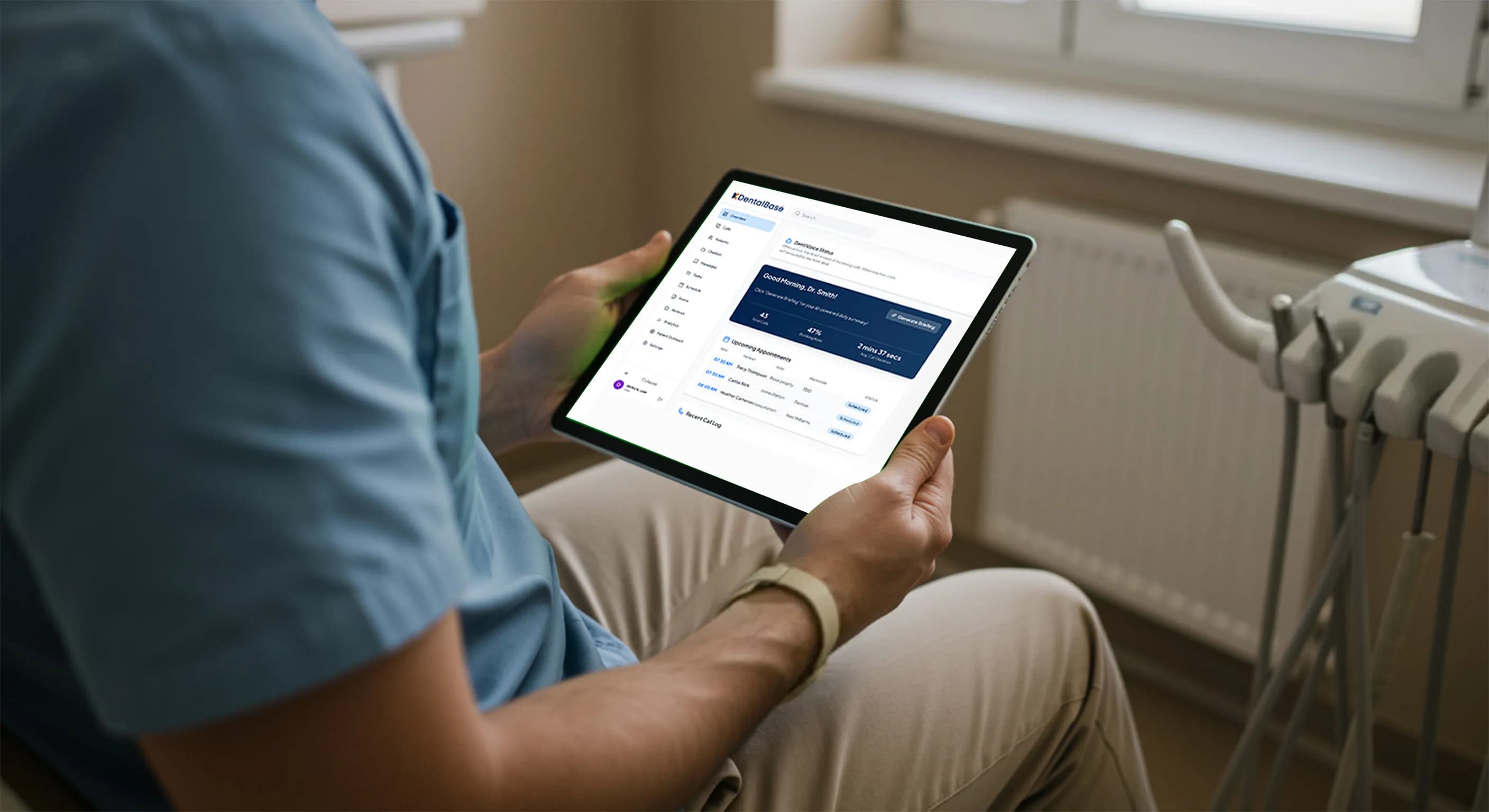
Why Does My Dentist Use an AI Receptionist? Beyond Spanish
Why does my dentist use an AI receptionist? See how a tiered language plan covers Spanish and beyond without leaving callers on hold.
Share:
Table of contents
Why does my dentist use an AI receptionist? A patient who speaks Tagalog, Vietnamese, or Arabic asks that at your front desk, and the honest answer is about language coverage. An AI dental receptionist can pick up a call in the caller's language at 6 p.m. or on a Saturday, when no staff roster can.
Spanish is the obvious starting point. It's also only the first line of a much longer list. According to Statista's chart of Census Bureau data, nearly 45 million people in the U.S. spoke Spanish at home in 2024, yet millions more speak Chinese, Tagalog, Vietnamese, or Arabic.
This guide gives you a coverage plan for the languages your patients actually speak. You'll see how to find them, tier them, and keep a human in the loop.
Why does my dentist use an AI receptionist for patients who don't speak English?
Your practice uses an AI receptionist because one front desk can't staff every language at every hour. The AI answers in the caller's language, books routine visits, and hands anything clinical to your team. Patients get an answer on the first ring instead of a voicemail they can't follow.
Patients rarely say this out loud, but a call that goes to English-only voicemail often ends the relationship before it starts. A new patient who can't book simply calls the next office on the list.
What a missed language call costs
Picture a three-provider practice taking about 200 calls a week. Suppose 8% of those callers prefer another language. That's 16 calls a week where your team needs a plan, before you count Saturday mornings, lunch breaks, and sick days.
Where this guide goes further
Our patient guide to AI receptionists covers the basics every caller wants to know. This article goes further and treats language as a coverage problem you can plan for.
Related: Spanish is the language most practices solve first, and our walkthrough shows how that call actually flows. How AI handles Spanish calls →
Which languages do your patients actually speak?
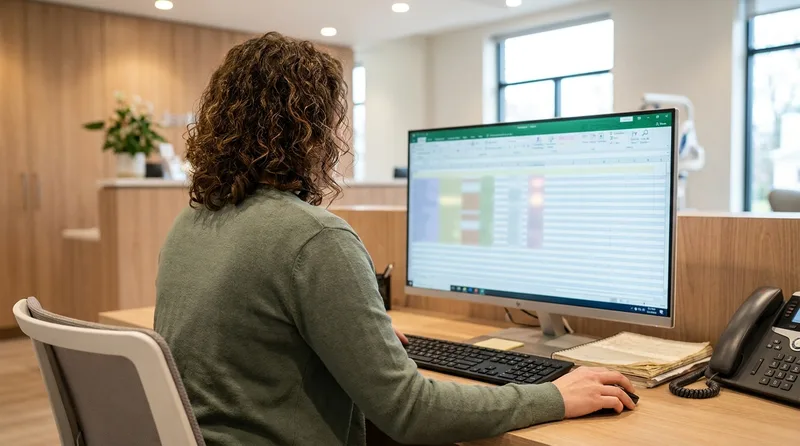
Start with data from your own practice, not national averages. Pull the preferred-language field from your patient records and the language notes from your last 90 days of calls. Those two sources show which languages deserve live coverage and which need a handoff plan.
National numbers still help you gut-check the list. According to Statista, more than 22% of people in the U.S. spoke a language other than English at home in 2023, and about 45% did in California. A 2023 study in BMC Medical Education, citing census data, put the figure at 21%, or 60.6 million people. It also found that 22% of those speakers don't speak English well or at all.
The mix keeps widening. A 2022 analysis in Pediatric Reports found that a university dental school's pediatric clinics went from 4 non-English, non-Spanish languages in 2010 to 21 by 2020. Your local mix may look the same.
A four-step language audit
- Export the preferred-language field from your patient records.
- Tally call notes where staff mentioned a language barrier or used a family interpreter.
- Check the top five zip codes by new-patient volume against Census language data.
- Rank languages by call volume, then by how urgent those calls tend to be.
Ten minutes in a spreadsheet beats guessing. Most practices find two or three languages carry nearly all the volume.
What does a multilingual dental call coverage plan include?
A multilingual coverage plan sorts each language into a tier: live AI coverage, AI with a human handoff, or interpreter line only. Each tier sets who answers, what the call can do, and when a person steps in. Writing it down keeps every shift consistent.
A simple three-tier model
Here's a simple three-tier model you can adapt. The tiers depend on call volume and on which languages your platform can handle accurately today.
| Tier | Who answers | What the call can do | Human step-in |
|---|---|---|---|
| Tier 1: live AI coverage | AI receptionist in the caller's language | Booking, changes, hours, directions, basic insurance questions | Pain, swelling, consent, billing disputes |
| Tier 2: AI plus handoff | AI greets, then routes to staff or an interpreter line | Greeting, language capture, callback request | Any booking that needs confirmation |
| Tier 3: interpreter line | Staff member with a phone interpreter | Full conversation through a qualified interpreter | Always |
How to assign each language a tier
Confirm which languages your platform supports on live calls before you assign a tier. If a language isn't fully supported, place it in Tier 2 and revisit the list every quarter.
How does an AI receptionist handle languages beyond Spanish?
An AI receptionist detects the language in the caller's first sentence, replies in that language, and follows the same call flow it uses in English. When it can't serve a language well, it says so politely and routes the caller to a person or a callback instead of guessing.
Where accuracy can slip
The quality question is real, and it deserves a straight answer. Accent, speaking speed, and medical vocabulary all affect accuracy. A caller saying a tooth name in Vietnamese on a noisy street is harder than a clean Spanish scheduling request.
That's why the Statista figures matter. Chinese is spoken at home by about 3.7 million people in the U.S., Tagalog by 1.9 million, Vietnamese by 1.6 million, and Arabic by 1.5 million. Each language has dialects and regional accents that a single test call won't catch.
How to test each language
- Test with real speakers. Ask staff, family, or community partners to place scripted calls.
- Test bad conditions. Try car noise, speakerphone, and fast speech.
- Test the handoff. A graceful exit matters more than a perfect booking.
Our explainer on HIPAA compliance for AI receptionists also applies in every language. Patient information deserves the same protection whether the call is in English or Haitian Creole.
When should a human take over a non-English dental call?
A human should take over whenever a call involves symptoms, consent, a treatment explanation, or a complaint. Scheduling and directions suit the AI. Anything that requires clinical judgment or a legal understanding belongs with trained staff and, for limited-English callers, a qualified interpreter.
What the ADA says about language access
There's a legal layer here, too. The ADA's guidance on limited English proficiency explains that Section 1557 requires covered dental practices to take reasonable steps to give LEP patients meaningful access. HHS encourages, but doesn't require, covered practices to write language access plans. Interpreters must show proficiency in both English and the other language, and they must translate accurately and impartially.
That standard is about care, not phone scheduling, and your counsel should confirm how it applies to your practice. But it shows why the AI belongs at the front of the call and a qualified person belongs at the clinical end.
Design the handoff before you go live
A clear escalation path protects patients and your team. See the triggers, summaries, and tuning steps that make handoffs smooth.
Read the staff handoff guide →Keeping an interpreter line on call
For a human step-in, many practices keep an interpreter service on speed dial. According to ADA News, the interpretation provider endorsed by ADA Member Advantage, now part of Propio Language Services, gives ADA members preferred pricing of $0.59 per minute for Spanish audio and $0.75 per minute for non-Spanish audio. It lists no minimums, setup fees, or contracts.
How do you write scripts and FAQs in each language?
You write each script once in plain English, have a qualified translator adapt it, and then test it with native speakers. Translating word for word often sounds stiff or wrong on the phone. Short sentences, familiar dental terms, and a clear next step work well.
Which scripts to translate first
Start with your highest-volume call types. Greeting, hours, location, new-patient booking, and insurance basics cover most calls. Then add emergency wording, because that's where a mistranslation does the most harm.
Keep your answers consistent across languages. If your English FAQ says you accept a plan, every translation must say the same thing. Our guide to training an AI receptionist on practice FAQs explains how to keep those answers current.
Four wording rules for translated scripts
- Use the term patients use ("cleaning"), not the clinical term ("prophylaxis").
- Avoid idioms that don't translate, such as "we'll fit you in."
- Spell out dates and times, and repeat them back before ending the call.
- Give the callback number twice, slowly.
Review every translation each time your fees, hours, or policies change.
How do you measure whether multilingual coverage is working?
You measure it by comparing answered calls, booked appointments, and handoff rates for each language against your English baseline. If a language books far fewer visits per call, something in the script, the accuracy, or the handoff is failing and needs a fix.

Four numbers to track each month
Track four numbers each month. Calls answered by language, bookings per call by language, handoffs by language, and repeat callers who tried again within an hour. That last one is a quiet signal that the first call didn't work.
Why access gaps matter
Context matters too. A peer-reviewed study of U.S. adults aged 50 and older, published through SAGE Journals, found complete tooth loss in 13.7% of Spanish speakers with limited English proficiency, compared with 5.0% of English-proficient Spanish speakers. Gaps like that are why access at the scheduling stage deserves attention. The NIDCR's oral health data collection is a useful place to compare your community's needs against national patterns.
- Set a baseline for English calls first.
- Review a sample of calls in each language every two weeks.
- Ask staff what they hear from patients, not just what the dashboard shows.
- Adjust scripts, then re-test with native speakers.
Keep language coverage running after launch
Call monitoring, staff handoffs, and FAQ updates become routine once you have a playbook. Add your language tiers to it.
See the operating playbook →How do you explain the AI receptionist to patients in their language?
You explain it with a short, honest statement at the start of the call and a visible notice in the languages you serve. Say that an automated assistant is answering, what it can do, and how to reach a person. Patients trust a clear disclosure more than a hidden one.
Many patients ask the question in this article's title when they first hear a voice that isn't a person. A practice that has an answer ready, in the patient's own language, turns suspicion into trust. Staff should know that answer by heart.
Checking the schedule sync
The AI also connects to your schedule. Whether you run Eaglesoft or another system, confirm that bookings sync back correctly for every language, including names with accents or characters your software may handle differently.
Keeping your team at the center
Finally, remember that technology supports your team. It doesn't take their place. The staff member who calls back a Cantonese-speaking patient with an interpreter on the line is the one who earns the trust.
The real reason a dentist uses an AI receptionist is coverage. Your patients speak more languages than your team can staff, and the phone rings at hours no one is at the desk. A tiered plan lets the AI handle what suits it and sends everything else to a person.
Your next step is small. Export your patients' preferred languages this week and put your top three into a tier table.
Build your language coverage plan
Use the one-week setup checklist to map greetings, handoffs, and testing for every language your patients speak.
Open the setup checklist →Frequently Asked Questions
Your dentist uses an AI receptionist because no front desk can answer every call live, in every language, at every hour. The AI books routine visits and hands clinical questions to staff, so callers aren't stuck in voicemail or on hold.
It depends on the platform and the language. Some languages work well on live calls, while others are safer with a handoff to staff or an interpreter. Ask your vendor which languages are live today, then test each one with native speakers.
Most practices do both. A bilingual hire covers one or two languages during one shift, while an AI receptionist adds coverage at lunch, after hours, and on weekends. It supports your team and leaves relationship-building to the people on your team.
According to the ADA, Section 1557 requires covered dental practices to take reasonable steps to give limited-English patients meaningful access. Whether it applies to your practice depends on whether you're a covered entity, so confirm with your attorney.
No. An AI receptionist is set up for scheduling and routine questions. Clinical conversations, consent, and treatment explanations with limited-English patients call for a qualified interpreter who is proficient in both languages, so route those calls to staff.
Check patient records for preferred language, review call notes for language barriers, and compare your top zip codes with Census language data. If even a few percent of calls involve another language, a written coverage plan is worth the ten minutes it takes.
It should say it's an automated assistant, explain what it can do, and offer a way to reach a person. Make the same disclosure in every language you serve, so patients aren't surprised halfway through the call.
Sources & References
- 1
- 2
- 3
- 4
- 5
Topics
Was this article helpful?
Written by
DentalBase Team
Expert dental industry content from the DentalBase team. We provide insights on practice management, marketing, compliance, and growth strategies for dental professionals.