AI Receptionist for DSOs: Scaling Calls Across Locations

Discover how DSOs in California are transforming dental practices. Learn about the largest groups, growth trends, and technology integration in 2026.
Share:
Table of contents
Introduction: Understanding DSOs in California
DSOs in California represent one of the fastest growing segments of the dental industry, and they are reshaping how practices operate across the Golden State. A Dental Service Organization provides comprehensive business support to dental practices, which lets dentists focus on patient care instead of administrative work.
California has become a major hub for DSO activity. With a population exceeding 39 million residents, diverse demographics, and a substantial healthcare market, the state's regulatory environment and economic scale make it attractive to both established organizations and emerging dental groups looking to expand.
This guide explains what these organizations offer to dental practices, examines the largest players in the market, and analyzes current growth trends. It also covers how modern technology, including AI dental reception systems, supports day-to-day operations. Independent dentists weighing partnership options will find the essential context they need to navigate California's evolving dental landscape in 2026.
DSO Affiliation in California: At a Glance
What Does DSO Stand For and How Do They Operate?
DSO stands for Dental Service Organization, a business entity that provides administrative and operational support to dental practices. These organizations handle non-clinical work, which lets dentists keep full clinical autonomy while benefiting from operational expertise and economies of scale.
Core Functions
A Dental Service Organization manages essential business functions like human resources, marketing, accounting, insurance credentialing, and supply chain management. Many also provide strategic guidance on practice growth, technology rollouts, and operational efficiency, along with services like real estate management, equipment financing, and continuing education for dental teams.
The structure lets practices keep their individual identities while tapping shared resources and best practices across the network. This model has proven especially effective in California's competitive market, where operational efficiency directly affects whether a practice stays sustainable. For many owners, the appeal mirrors the relief of solving the hardest part of running a dental practice: the administrative load.
How They Make Money
These organizations generate revenue through several mechanisms. The most common is a management fee based on a percentage of practice collections, typically 8% to 15%. Some also earn through vendor partnerships, bulk purchasing agreements, and technology licensing. Many provide financing for practice acquisitions and expansions, earning interest and fees on those services.
The Largest DSOs in California (List and Overview)
The largest DSOs in California include a mix of national giants and homegrown groups, each with a distinct approach to practice support and growth. Understanding the landscape helps practices evaluate partnership opportunities and make sharper market positioning decisions.
| Organization | Practice Count (Approx.) | Primary Focus |
|---|---|---|
| Heartland Dental | 1,700+ locations | Support for general dentistry practices; the largest in the US (Becker's Dental) |
| Pacific Dental Services | 1,000+ locations | Business and operational support, including integrated care initiatives (DrBicuspid) |
| Aspen Dental | 1,100+ locations | General and accessible dental care |
| Western Dental | 300+ locations | California-rooted group with broad managed-care reach |
Top Multi-Location Players
Pacific Dental Services is one of the most prominent groups in the state, operating more than 200 California locations. Founded in California, it has deep local market knowledge and established relationships with suppliers, insurance networks, and regulatory bodies.
Heartland Dental has also built a significant California presence, focused on supporting general dentistry practices with comprehensive business services. Its technology-forward approach includes advanced practice management systems and patient communication tools that improve operational efficiency.
Smaller regional groups like Dental Care Alliance and MB2 Dental have carved out niches in specific California markets, often around particular specialties or demographics. They show that the category spans both large national players and specialized regional groups.
Are DSOs Taking Over Dentistry in California?
The growth of these organizations has sparked debate about industry consolidation and what it means for independent practices. Current data suggests affiliated practices represent roughly 15-20% of the California market, a sharp rise from less than 5% a decade ago.
Growth Trends and Market Share
Several forces drive expansion in California. Rising acquisition costs, growing regulatory complexity, and the administrative burden of insurance management push many dentists toward partnership. Younger dentists often prefer employment or partnership arrangements that let them focus on clinical work and avoid the financial risk of ownership.
The COVID-19 pandemic accelerated this shift as many independent practices faced financial pressure. These organizations provided stability and resources that helped practices weather the uncertainty while maintaining care standards. The trend has continued into 2026, with active recruitment of both new graduates and established practitioners.
What This Means for Independent Practices
Even with substantial DSO growth, independent practices remain a vital part of California's dental market. Many differentiate through personalized patient relationships, specialized services, or a distinct practice philosophy. The key is leveraging technology and efficient operations to compete effectively, which is exactly why tools like a capable AI receptionist matter for solo and small-group offices.
Partnership has also created room for collaboration rather than pure competition. Some independent practices contract for specific services like billing, marketing, or continuing education while keeping full autonomy over clinical and operational decisions.
Real-World Scenarios: How California Practices Use DSOs
Seeing how these partnerships work in practice makes the tradeoffs concrete. Two common scenarios show how different practice types use support to hit their goals.
Single-Office Dentist Joining a Group
Consider Dr. Martinez, who ran a solo practice in San Diego for 15 years before partnering with a regional group. Beforehand, he spent roughly 20 hours a week on administrative tasks like billing, staff management, and vendor negotiations. After joining, those responsibilities shifted to the support team, freeing 15 hours a week for patient care.
The partnership delivered immediate benefits: lower supply costs through bulk purchasing, streamlined insurance processing, and access to advanced practice management software. Dr. Martinez kept clinical decision-making authority while gaining business expertise that would have been cost-prohibitive for a single practice. Much of that time savings came from automating phone work, similar to how practices answer dental calls after hours without hiring.
Multi-Location Growth With Support
Dr. Kim represents another common path. After running two Bay Area practices, she wanted to expand but lacked the capital and systems for rapid growth. A partnership secured financing for three more locations plus proven multi-site management systems.
That support enabled standardized protocols across all five locations, centralized training, and coordinated marketing that lifted patient flow by 25% within 18 months. Consistency at that scale depends on disciplined phone handling, the same challenge covered in dental call routing and triage.
How Technology and AI Support DSO Operations
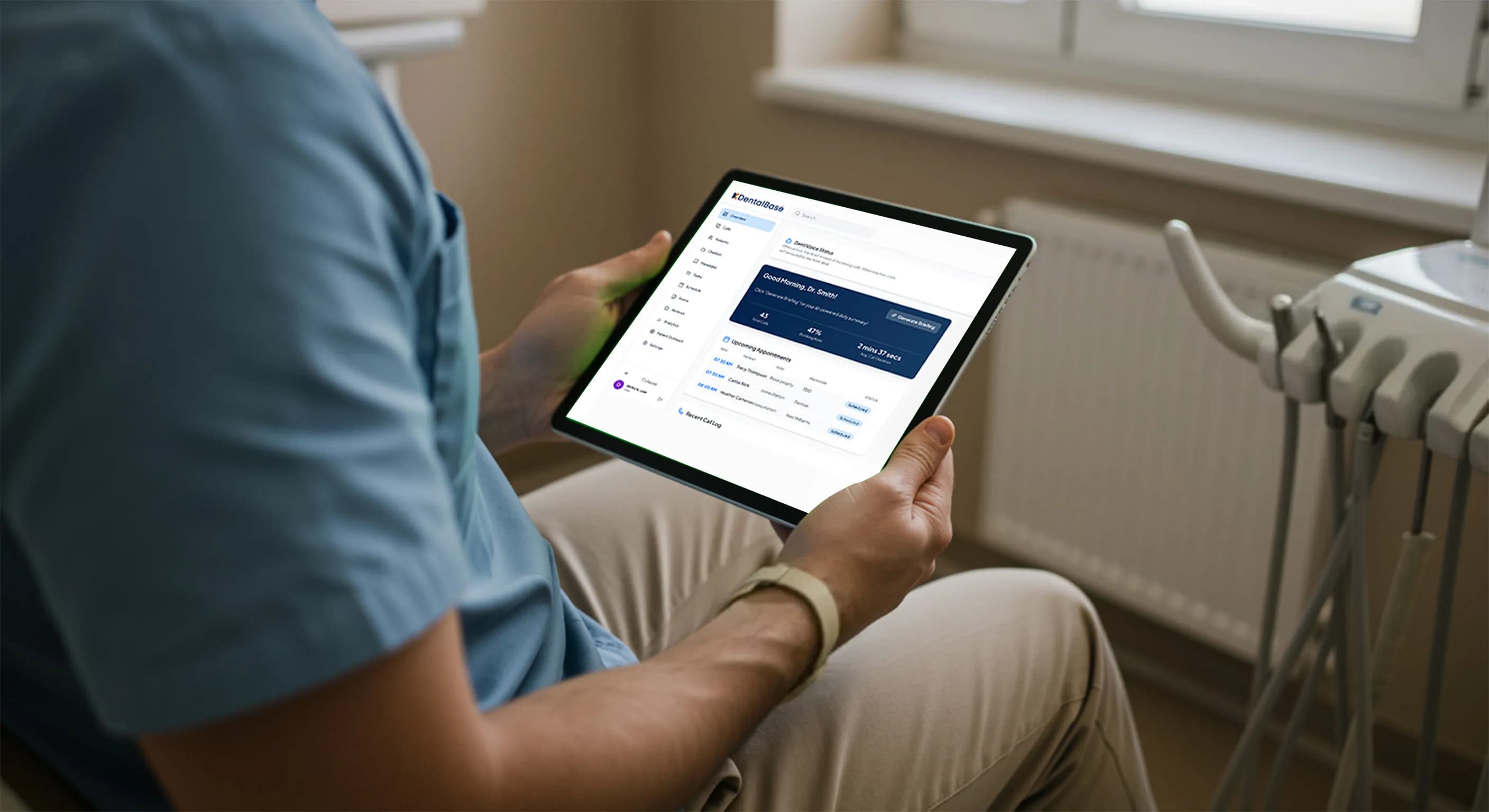
A dso ai receptionist sits on top of this technology stack and answers every location the same way. Choosing an ai receptionist for dso groups is less about one office and more about consistency: the same greeting, the same intake questions, and one shared record of every call across all sites.
Modern DSOs in California lean heavily on technology to deliver efficient, cost-effective support to affiliated practices. Technology integration has become a key differentiator and a major factor in operational success.
AI Dental Reception and Patient Communication
Artificial intelligence has reshaped the patient communication systems these groups rely on. AI-powered dental reception handles routine interactions like appointment scheduling, insurance verification, and follow-up calls. These systems run 24/7, so patients can reach the practice outside business hours while the administrative load on staff drops.
Modern AI reception integrates directly with practice management software, updating patient records automatically and triggering the right follow-up actions. For an organization managing hundreds of practices, that automation keeps the patient experience consistent across every location while holding down operating costs. Measuring that impact is its own discipline, covered in measuring AI receptionist success.
Get DSO-level phone coverage without the DSO
DentiVoice answers every call, books appointments, and verifies insurance 24/7 — so independent practices compete on service, not staffing.
Book a DemoSupporting Staff, Not Replacing Them
Technology here is about supporting dental staff, not replacing people. AI handles routine tasks so team members can focus on complex patient needs and relationship building, which tends to improve job satisfaction alongside care quality.
Groups typically provide thorough training on new tools so staff use them well while keeping the personal touch patients value. The blend of human expertise and technological efficiency creates a competitive edge that benefits practices and patients alike in California's fast-moving healthcare market.
Conclusion: What This Means for the Future
The evolution of these organizations marks a real shift in how dental practices operate, and it will keep shaping the industry through 2026 and beyond. As groups mature and refine their offerings, they create new opportunities for dental professionals and patients across the state.
The throughline is clear: DSOs in California provide operational support that frees dentists to focus on care, technology integration enhances rather than replaces human staff, and both affiliated and independent practices can thrive in this diverse market. The right choice depends on each practice's goals and values, and independents that embrace technology and efficient operations can stay fully competitive.
The future of dentistry in California will likely feature continued group growth alongside innovative independent practices, creating an ecosystem that serves a wide range of patient needs. Whichever path a practice takes, the winners will be those that prioritize patient care, run efficiently, and use technology to strengthen the human relationships at the heart of dentistry.
See what an AI receptionist does for your practice
Whether you join a DSO or stay independent, missed calls cost patients. DentiVoice covers the phones so your team can focus on the chair. Book a quick demo to see it live.
Book a DemoFrequently Asked Questions
DSO stands for Dental Service Organization. These business entities provide administrative, marketing, and operational support to dental practices while dentists keep full clinical autonomy, handling billing, HR, and technology so dentists can focus on patient care.
Heartland Dental is one of the largest groups operating in California, supporting hundreds of practices statewide. Other major players include Pacific Dental Services, Aspen Dental, and Western Dental, each managing significant numbers of California practices.
Not entirely. Affiliated practices represent roughly 15-20% of the California market. Nationwide, 13% of dentists were affiliated in 2022, up from 8.8% in 2017. The trend is strongest among new graduates, signaling growing acceptance rather than a full takeover.
DSOs charge affiliated practices a management fee, typically 8-15% of collections. They also earn through bulk purchasing of supplies and equipment, technology licensing, and financing for practice acquisitions, plus rent where they own the real estate.
A DSO should look for an ai receptionist for dsos that books into each location's schedule, keeps intake identical across sites, and reports call performance group-wide. A dso ai receptionist is most valuable when it standardizes the patient call without adding work for local teams.
Was this article helpful?
Written by
DentalBase Team
Expert dental industry content from the DentalBase team. We provide insights on practice management, marketing, compliance, and growth strategies for dental professionals.