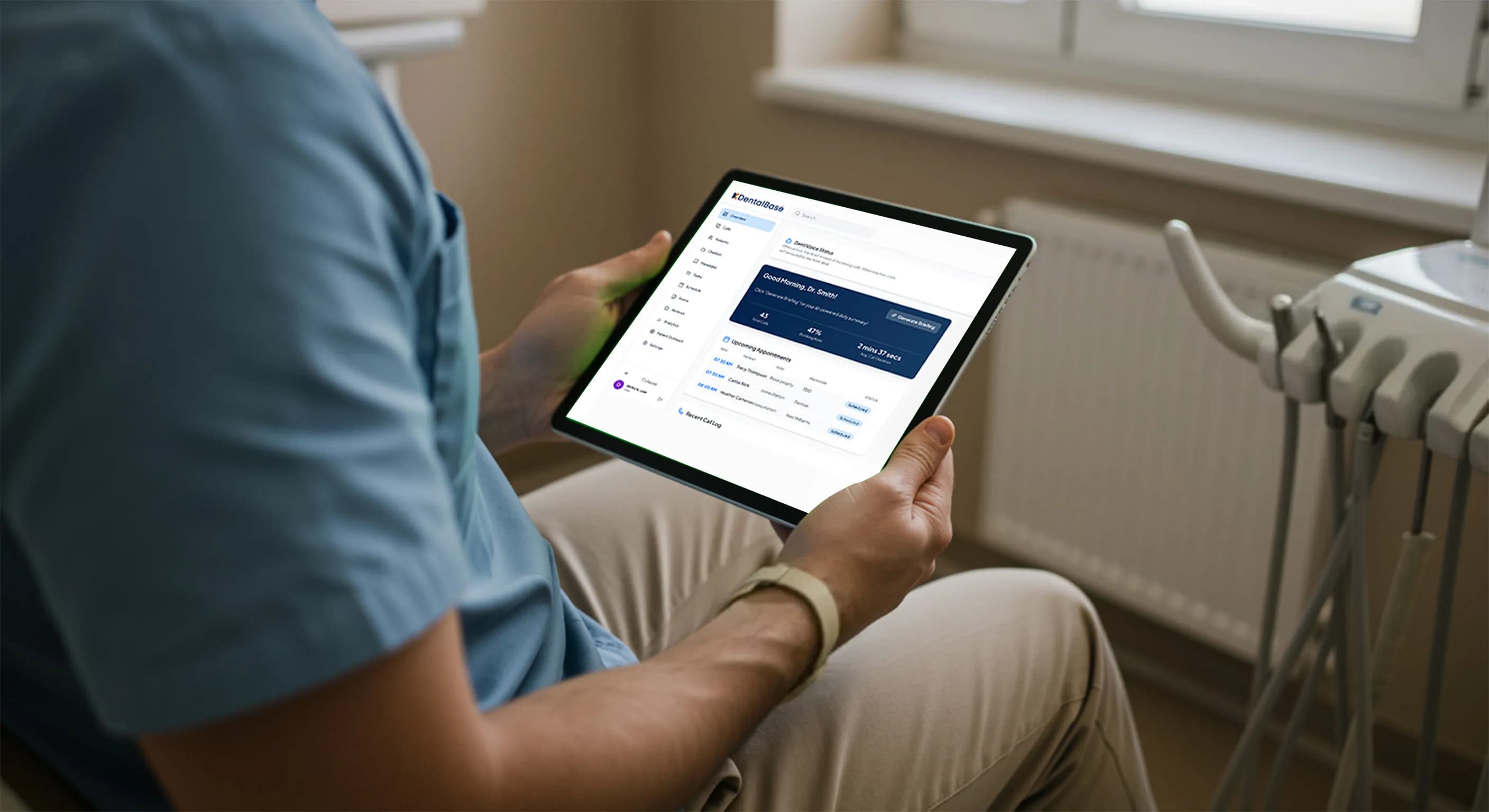
Missed Calls Are Costing You: How AI Recovers Dental Revenue
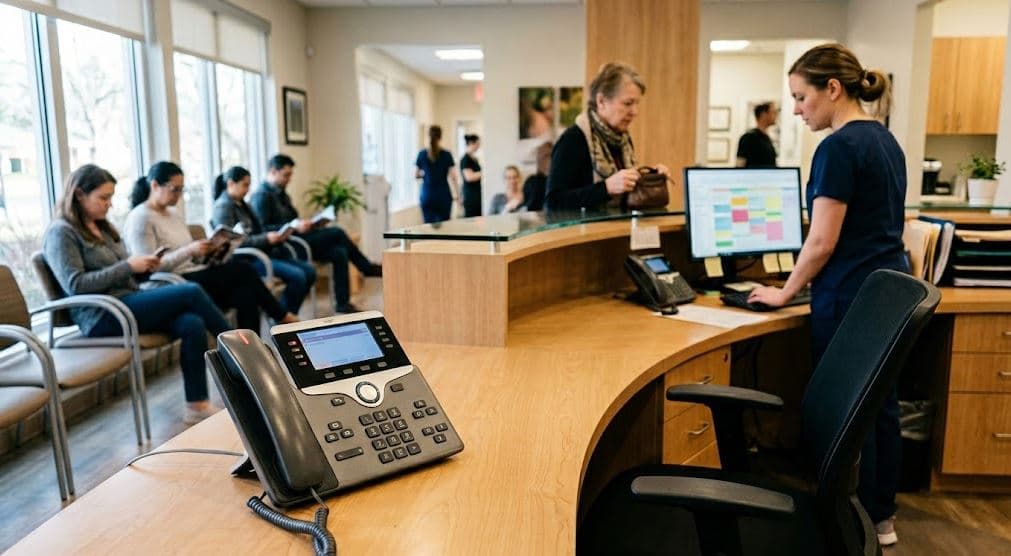
AI dental phone answering captures missed calls, books patients in real time, and helps recover lost revenue. See how it works inside a dental office.
Share:
Table of contents
Preventing Missed Revenue with AI Dental Phone Answering
Missed calls cost dental practices revenue because every unanswered ring is a patient who books elsewhere. AI dental phone answering closes that gap by answering every call, identifying what the caller needs, and booking the appointment directly into the schedule without adding front desk workload.
A busy dental office can receive hundreds of calls each week, yet industry data suggests 20% to 30% of those calls are never answered live. Each missed call often represents a patient actively looking for care, an appointment change, or an urgent need that directly ties to revenue. Over the course of a month, that silence on the line can quietly drain thousands of dollars from a practice. This is where AI dental phone answering becomes a practical operational tool rather than a futuristic idea.
Dental practice owners know the problem well. Front desk teams juggle check-ins, insurance questions, treatment coordination, and patient conversations, all while phones keep ringing. After hours, weekends, or during lunch breaks, calls frequently go to voicemail. Research into patient behavior shows that more than 60% of patients who hit voicemail during an initial call will not call back the same day. That lost opportunity compounds quickly. The staffing pressure underneath it is unpacked in why dental staffing gaps hurt the patient experience.
AI dental phone answering addresses this gap by giving practices a way to answer every call, capture intent, and move patients forward without overloading staff. This article walks through how these systems work, how they help prevent missed revenue, and what implementation actually looks like inside a real dental office. You will also see concrete numbers from industry studies, practical rollout steps, and real-world scenarios showing how calls turn into appointments when the phone is always answered.
What is AI dental phone answering?
AI dental phone answering is software that picks up inbound practice calls, holds a natural spoken conversation with the caller, works out what they need, and then acts on it. Instead of routing everyone to voicemail or a menu tree, the system identifies the intent behind the call: a new patient asking about availability, an existing patient moving an appointment, an insurance or balance question, or a same-day emergency that needs a human right away.
Balance and statement calls are their own category inside that mix, and they carry compliance rules the others don't. a closer look at handling dental billing question phone calls walks through exactly what an AI system can resolve on the spot versus what still needs to route to your billing team.
The distinction that matters for a practice owner is between answering and resolving. An answering service takes a message. An AI system checks the schedule, offers open slots, books the visit, and writes the details back into the practice management software, so the call ends with an outcome rather than a callback list for the front desk to work through the next morning. To see how that plays out step by step, read our overview of AI appointment booking that reduces no-shows and fills chairs.
What counts as a missed call in a dental practice?
Most practices measure only the calls that rang out unanswered, which understates the problem. A missed call is better defined as any inbound call that ends without the patient getting what they called for. That includes several patterns a standard phone report will not separate out:
- Voicemail hangups. The caller reaches the greeting and disconnects without leaving a message.
- Hold abandonment. The call is answered, then dropped while the caller waits for someone to come back to the line.
- After-hours and weekend calls. Evenings, weekends, and holidays, when a caller with a toothache is looking for whoever answers first.
- Coverage gaps during the day. Lunch breaks, huddles, staff meetings, and the stretches when the front desk is checking a patient in.
- Answered but unconverted. The call connects, the question gets answered, and nobody asks for the appointment.
Counting all five together usually produces a number well above what the phone system reports, and it is the number that lines up with the revenue gap covered in the sections below.
Why Missed Calls Equal Missed Revenue in Dental Offices
The hidden cost of unanswered phones
Every unanswered call is a decision point for a patient. Studies on healthcare access show patients typically call two to three providers before booking. If your practice does not answer, they often move on. In dental practices averaging 120 inbound calls per day, missing even 15% can mean 18 lost conversations daily. Over a 22-day work month, that is nearly 400 missed connections.
Revenue impact adds up quickly. A new patient exam and X‑ray package commonly ranges from $150 to $300, not counting future treatment. Industry case studies show practices converting just 30% of missed new patient calls could unlock $4,000 to $7,000 in monthly production. For a deeper look at the numbers, see what each unanswered call costs a dental practice.
| Where calls slip away | Typical scenario | Why it costs revenue |
|---|---|---|
| Peak-hour overflow | Morning check-ins and post-lunch rush collide with inbound calls. | New patients hang up and dial the next practice on their list. |
| After-hours and weekends | Working adults call when the office is closed. | Voicemail rarely converts; the intent is gone by morning. |
| Lunch breaks | Front desk is at lunch while phones keep ringing. | Time-sensitive and emergency calls go unanswered. |
| Recall and follow-up gaps | Outbound recall calls get deprioritized under daily load. | Overdue hygiene visits never get rebooked. |
Staffing limits and call spikes
Front desk teams are not underperforming; they are overloaded. Peak call times often overlap with morning check-ins and post-lunch scheduling rushes. Data from dental operations surveys indicates call volume spikes by 40% between 8-10 a.m. and 1-3 p.m. Without overflow coverage, calls roll to voicemail. Some of that overload comes from calls that were never patients to begin with, including job applicants calling about an open front desk position, which compete for the same three rings during the same peak windows.
After-hours calls are another revenue leak. Approximately 35% of new patient inquiries occur outside traditional office hours, especially from working adults. Traditional answering services can capture messages but rarely book appointments in real time. AI dental phone answering fills this gap by engaging callers immediately.
Patient experience implications
Missed calls also hurt trust. A patient who cannot reach the office may delay care or seek another provider. Over time, this affects retention and online reviews. Consistently answering calls improves perception of availability, responsiveness, and professionalism, all of which influence long-term practice growth.
There is also a competitive angle worth naming. When a patient cannot reach a live voice, the practice that answers first usually wins the appointment. That is why call coverage now sits alongside marketing and online reputation as a growth lever rather than a back-office chore. Treating the phone as a revenue channel, not just a support line, reframes how owners budget for coverage. If you are weighing whether to act on that, here is the business case for an AI receptionist at a dental practice in full.
Related: If you want to put a dollar figure on the gap before changing anything, the cost adds up faster than most owners expect. Calculate the true cost of missed dental calls →
How AI Dental Phone Answering Works in Real Practices
Handling complex call scenarios
In real dental offices, calls are rarely one-dimensional. A single conversation may involve scheduling, insurance questions, and urgency assessment. AI dental phone answering systems are designed to handle these layered interactions by asking follow-up questions and adapting responses based on caller input.
For example, when a caller asks about insurance before scheduling, the system can confirm accepted carriers, explain next steps for verification, and then transition directly into booking. This reduces the number of calls that front desk teams need to return later. Practices report fewer incomplete conversations and clearer documentation of patient intent when conversational AI handles the first interaction.
The stakes go up when that caller turns out to be out-of-network. A vague answer about cost is one of the fastest ways to lose a booking, which is why answering out-of-network insurance questions without stalling the call matters as much for revenue as it does for compliance.
The mechanics behind that first interaction are worth understanding before you compare vendors. This walkthrough of how dental call handling AI moves a caller from the first ring to a booked appointment → breaks the process into its five working stages.
One layer of that process deserves special attention: what happens after the call ends. What missed-call text-back actually solves for a dental office covers the follow-up step that turns a missed ring into a booked visit.
Compare your coverage options side by side
In-house staff, a traditional answering service, and AI each handle calls differently. Seeing the tradeoffs makes the decision clearer.
See coverage models compared →Natural conversations, not phone trees
Modern AI dental phone answering systems rely on conversational voice technology rather than rigid menu trees. Callers can speak naturally, saying phrases like “I need to schedule a cleaning” or “I have a toothache,” and the system responds appropriately. This reduces frustration and shortens call time.
The system identifies intent, gathers essential information, and either books appointments directly or routes calls based on urgency. Research into AI reception usage shows average call handling times drop by 22% compared to manual front desk calls.
24/7 call handling without burnout
A major advantage is continuous availability. AI dental phone answering enables true 24/7 call handling without adding shifts or overtime. Calls after 6 p.m., on weekends, or during holidays are answered consistently. In one documented case study, a dental office recovered over $6,000 in one month by converting after-hours missed calls into booked appointments. Preventing that burnout takes more than after-hours coverage alone, and this full guide to reducing dental front office burnout covers the fuller picture.
This constant availability aligns with patient expectations shaped by online scheduling and on-demand services. Being available when patients are ready to act helps increase patient appointments.
Smart routing and escalation
AI systems do not replace staff; they support them. Urgent calls can be flagged and escalated to on-call staff, while routine scheduling, confirmations, and inquiries are handled automatically. Integration with appointment scheduling AI allows real-time booking into available chair time, reducing back-and-forth calls.
Triage logic is what makes this safe. A caller describing facial swelling or a knocked-out tooth should reach a person quickly, while a routine cleaning request can be booked end to end. The rules that separate the two are configurable, and getting them right is the difference between a helpful system and a frustrating one. Our breakdown of how AI triages urgent versus routine calls walks through the decision tree in detail.
Protecting patient data on every call
Because dental calls routinely touch insurance details and health information, call handling has to respect patient privacy from the first hello. According to the U.S. Department of Health and Human Services, HIPAA sets national standards for how protected health information is collected and shared. Well-designed call handling captures only what is needed to schedule or route a call, and confirms caller identity before discussing account details.
For practices that want a defined verification step, the front-end conversation can confirm who is calling without adding friction. That keeps the experience fast for the patient while keeping the office aligned with privacy expectations. You can see how that flow works in our guide to dental patient phone verification.
Preventing Missed Revenue with AI Dental Phone Answering Systems
Capturing after-hours demand
AI dental phone answering directly targets revenue leakage by capturing calls that would otherwise go unanswered. Industry data indicates practices that implemented AI call handling reduced missed calls by an average of 38% within the first 60 days. Those captured calls often include high-value procedures or emergency visits.
Every missed call is a patient who chose silence over your schedule
See how DentiVoice answers every call, books in real time, and routes emergencies the moment they come in.
Book a DentiVoice demo →Reducing hold times and abandonment
Long hold times cause call abandonment. Studies across healthcare call centers show abandonment increases sharply after 90 seconds on hold. AI dental receptionist tools answer immediately, eliminating hold queues during peak periods. Practices report abandonment rate drops of 25% to 40% after implementation.
Booking first-time patients faster
Speed matters. When AI systems book new patients during the first call, conversion improves. Practices using appointment scheduling AI have seen new patient bookings increase by roughly 18% compared to callback-based workflows. Faster booking shortens the decision window and secures the appointment before the patient calls another office.
Supporting patient follow-up automation
Missed revenue is not limited to new patients. Recall and follow-up calls are often delayed or skipped due to staffing constraints. AI-driven patient follow-up automation re-engages existing patients for overdue hygiene visits, treatment plan follow-ups, and post-op check-ins. Data from dental engagement studies shows automated follow-up programs increase recall appointment completion by 21%.
Recall is where many practices quietly lose the most ground, because reactivation work is easy to postpone when the day gets busy. Automating the first touch keeps overdue patients from falling off the schedule entirely, and it frees the team to handle the conversations that actually need a human. For a deeper look at structured win-back outreach, see our guide to recovering lost dental patients with outbound calls. Layering AI on top of that manual effort is what makes structured AI outreach that reactivates overdue hygiene patients possible at scale.
Step 1: Audit your current call data
Start by reviewing call logs. Identify total inbound calls, missed calls, peak times, and after-hours volume. Many practices discover that 25% or more of calls come when staff availability is lowest. This data establishes a baseline to measure improvement and helps determine where AI dental phone answering will have the most impact.
- Total inbound calls per day and per week, so you have a clear volume baseline.
- Missed and abandoned calls, broken out by time of day.
- Peak windows, typically the morning check-in rush and the post-lunch block.
- After-hours and weekend calls that currently land in voicemail.
- Callback rate: how often a returned call actually reconnects with the patient.
Step 2: Define call handling rules
Determine which calls the AI dental receptionist should handle versus escalate to staff. Common automated flows include new patient scheduling, hygiene and recall appointments, general questions about hours and insurance, and basic emergency triage. Clear rules protect patient safety while keeping workflows predictable for the team.
Step 3: Integrate with existing systems
Integration with practice management software allows real-time scheduling and accurate patient data capture. Most modern solutions connect via secure APIs, reducing duplicate entry. Practices commonly report administrative task time reductions of 15% to 20% once integration is complete.
Step 4: Train staff and set expectations
Staff buy-in matters. Position AI as support rather than replacement. Front desk teams benefit from fewer interruptions and more focused in-office patient interactions. Many practices also communicate to patients that calls will always be answered, setting a clear expectation of responsiveness. Share why AI supports dental receptionists rather than replacing them with your team before launch.
Step 5: Monitor performance and optimize scripts
Once live, ongoing review is critical. Dashboards typically show answered calls, booked appointments, abandonment rates, and call reasons. Weekly reviews during the first 60-90 days allow practices to refine call flows, update FAQs, and adjust escalation rules. Small optimizations often improve conversion rates by several percentage points without increasing cost.
Cost-Benefit Analysis: What the Numbers Show
Comparing AI coverage to traditional alternatives
When evaluating AI dental phone answering, many practices compare it to hiring additional staff or outsourcing to a call center. A full-time front desk hire can exceed $45,000 annually when wages, benefits, and turnover are included. By contrast, AI-based systems carry a predictable monthly cost and do not fluctuate with call volume.
Unlike generic answering services, AI tools can book appointments directly and follow defined rules, which shortens the revenue cycle. This difference is often where practices see the largest financial impact, especially during marketing campaigns or seasonal call spikes.
| Coverage option | Books appointments live? | Available 24/7? | Scales with call spikes? |
|---|---|---|---|
| Additional front desk hire | Yes, during their shift | No | Limited by headcount |
| Traditional answering service | Rarely; usually takes messages | Often, with limits | Partial |
| AI dental phone answering | Yes, end to end | Yes | Yes, instantly |
Capabilities vary by vendor and configuration; the table reflects typical differences between coverage models rather than any single product.
Direct financial return
Costs for AI dental phone answering typically fall well below the expense of adding another full-time team member. Even conservative estimates show that converting just one to two additional new patients per week can offset monthly system costs.
In real-world examples, practices recovering $3,000 to $6,000 per month in previously missed revenue report positive ROI within the first 30 to 60 days.
Operational efficiency gains
Reduced call interruptions allow staff to focus on in-office patients. Studies indicate that dental practices using AI reception tools experience a 12% improvement in overall dental practice efficiency, measured by appointment flow and reduced overtime.
Scalable growth
As practices grow, call volume increases without proportional staffing growth. AI systems scale instantly, supporting expansion, multi-location practices, and marketing campaigns without overwhelming the front desk.
Is Your Practice Leaking Revenue Through the Phone?
Use this quick self-check to gauge how much of your call volume is at risk. The more boxes you can honestly check, the less likely the phone is quietly costing you appointments.
Phone Coverage Health Check
Check each item that is already true at your practice.
Your score: count your checks out of 5. Three or fewer means revenue is likely slipping through unanswered calls.
If you want to put numbers behind this self-check, pair it with your own call data. Pulling answered-call rates, peak-time volume, and after-hours counts turns a gut feeling into a baseline you can act on, and it shows exactly where always-on coverage would recover the most. Our overview of the call analytics metrics that drive revenue explains which numbers matter most.
Missed calls are more than a communication issue. They represent measurable revenue loss, delayed care, and added pressure on already busy front desk teams. AI dental phone answering gives practices a practical way to stay responsive, capture patient intent, and convert conversations into scheduled care without adding staffing strain.
For dental practice owners, the next step is simple and data-driven: review your call logs. Look closely at how many calls go unanswered, when those gaps occur, and how often callbacks replace real-time scheduling. Those numbers quickly reveal whether missed calls are costing your practice growth opportunities.
If you want to explore how consistent call coverage, real-time scheduling, and structured call workflows could fit into your office, DentiVoice provides a practical way to evaluate AI dental phone answering in a real-world dental setting before making long-term changes.
Missed patient calls are not the only leak worth plugging. A dental lab communication workflow stops case status and remake calls from quietly eating into the same staff time.
Stop sending patients to voicemail
DentiVoice answers every call, books appointments in real time, and routes emergencies the moment they come in, so revenue stops leaking through the phone.
See DentiVoice in action →If the next question is whether a flat AI subscription or a per-call human service protects revenue better long-term, this AI receptionist vs traditional answering service pricing breakdown lays out both cost curves side by side.
Not sure where to start? Begin with the fundamentals.
Read the complete guide to dental phone coverage →Frequently Asked Questions
AI dental phone answering reduces missed calls by answering every inbound call immediately, including after hours, weekends, and during peak times. It eliminates voicemail reliance, captures patient intent in real time, and routes urgent calls to staff. The result is fewer abandoned calls and more booked appointments.
The financial benefits include recovering revenue from missed new patient calls, improving recall appointment rates, and reducing administrative overhead. Because the monthly cost stays predictable regardless of call volume, converting just one or two extra new patients a week can offset it. Many practices report positive returns within the first two months.
AI dental receptionists integrate through secure connections that read live schedules and patient records. This enables real-time booking directly into open chair time and reduces manual data entry for staff. Practices commonly report a noticeable drop in administrative task time once the integration is complete and call rules are set.
Common challenges include defining clear call escalation rules, setting accurate scheduling logic, and training staff on the new workflow. Most are resolved during setup through careful configuration and a short tuning period. Reviewing call logs weekly in the first 60 to 90 days helps refine escalation rules and conversation flows.
Yes. AI receptionists handle routine inquiries, scheduling, recall, and follow-ups using natural conversation and real-time scheduling tools. They confirm details, answer common questions about hours and insurance, and book appointments end to end, while escalating anything urgent or complex to a human team member.
No. AI dental phone answering supports front desk staff by reducing interruptions and handling repetitive calls, which lets the team focus on in-office patient care. Urgent and sensitive conversations are escalated to a person, so the technology acts as overflow and after-hours coverage rather than a replacement for staff.
Most modern systems are built with healthcare security standards in mind and capture only the information needed to schedule or route a call. They confirm caller identity before discussing account details and follow established data-protection practices, which helps practices keep call handling aligned with patient privacy expectations.
Yes. Practices with 24/7 call handling consistently convert more after-hours and weekend calls into booked appointments, because the patient is reached while their intent is still high. Working adults often call outside office hours, and answering those calls live prevents them from booking with a competing practice instead.
Sources & References
- 1ADA Health Policy Institute Research
ADA research arm for practice-economics and patient-access context.
- 2CDC Oral Health, About
U.S. public-health authority on dental care access context.
- 3NIDCR, National Institute of Dental and Craniofacial Research
NIH dental research data for patient-behavior context.
- 4Exploring the Benefits of AI Receptionists in Dental Offices
Industry analysis of AI reception impact on patient access and workload.
- 5AI Dental Receptionist: 24/7 Patient Calls & Scheduling
Industry overview of AI dental reception for reducing missed calls.
Topics
Was this article helpful?
Written by
DentalBase Team
Expert dental industry content from the DentalBase team. We provide insights on practice management, marketing, compliance, and growth strategies for dental professionals.