How to Reach a Human Dental Office Phone Line Faster
Need to reach a human dental office phone line fast? Learn when to call, what to say to an AI or menu, and how to flag a dental emergency.
Share:
Table of contents
Trying to reach a human dental office phone line on a Monday morning can feel like a test of patience. You get a menu, then hold music, then voicemail. The fastest way through is simple: call mid-morning midweek, open with your reason in one sentence, and ask for the front desk by role.
Here's the good news. Most offices really do want to talk to you, and the delay usually comes from timing, staffing, and call routing rather than indifference. If your dentist uses an automated system, it's built to pass you to a person when you need one. Why your dentist uses an AI receptionist explains what that system does on the call.
This guide covers when to call, what to say to a phone menu or AI, how to flag an emergency, and which channels can beat a phone call entirely.
Why Is It So Hard to Reach a Human at a Dental Office?
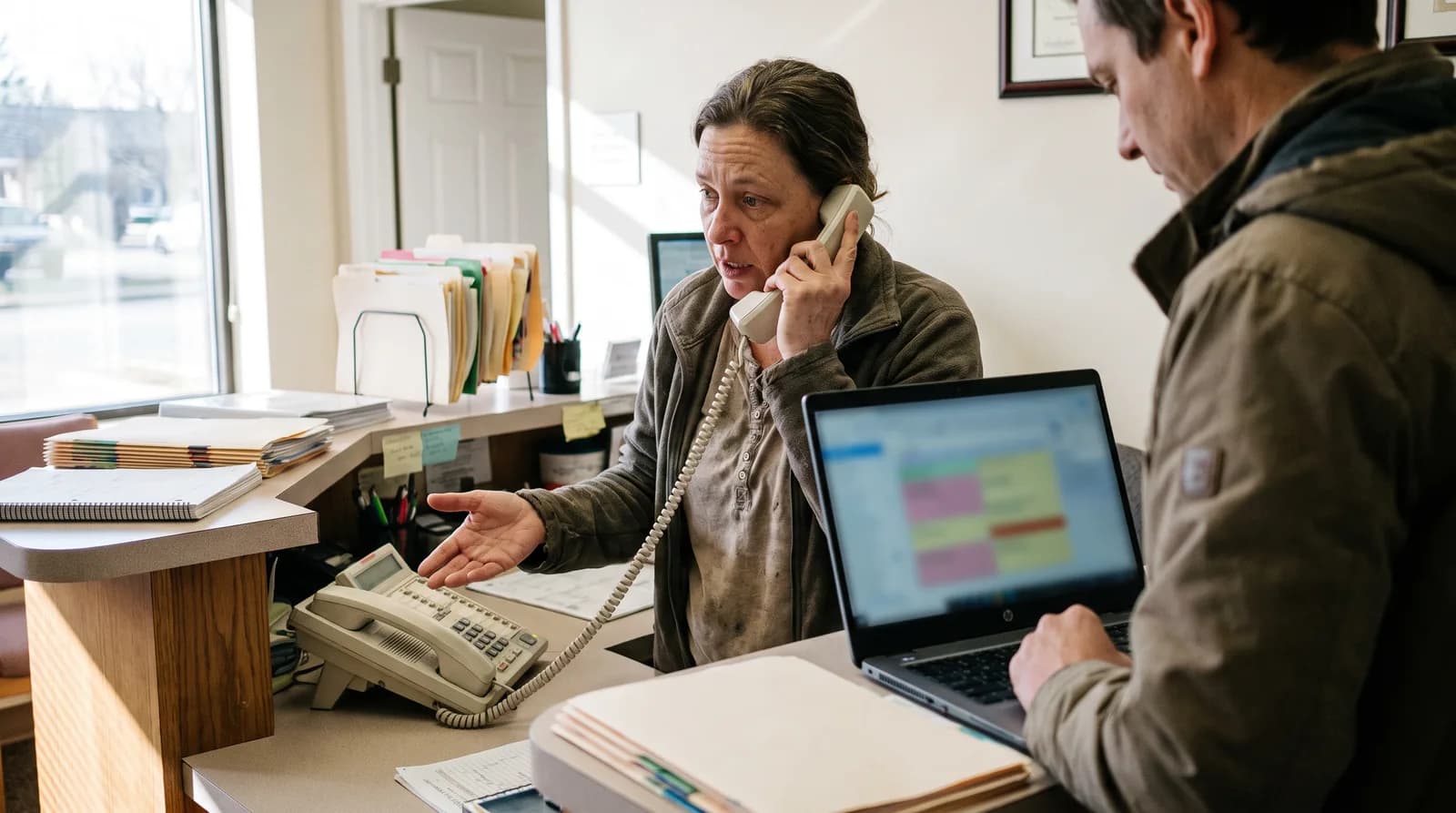
It's hard because the same few people answering the phone are also checking patients in, handling insurance, and collecting payments. Most offices run lean front desks, so when two patients are at the counter and three lines ring at once, somebody has to wait. Often that's the caller.
Staffing Shortages Behind the Front Desk
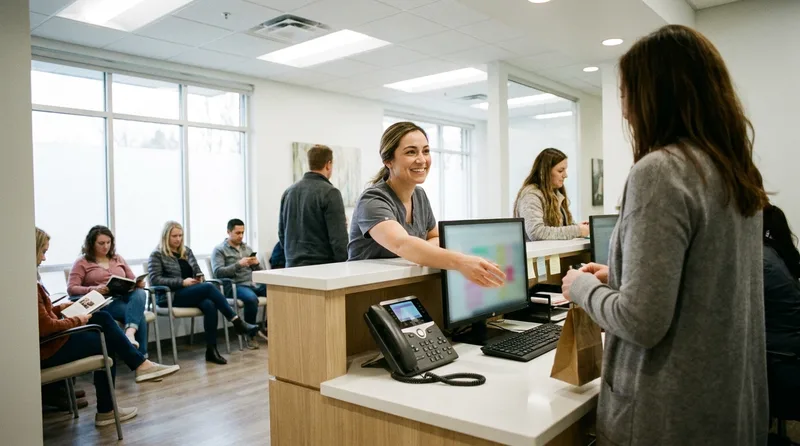
Staffing is the root of it. When the ADA Health Policy Institute asked dentists in late 2024 to name their biggest challenge for 2025, about 62% said staffing shortages, the top answer, according to ADA News coverage of the survey. Practice leaders quoted in that report described front desk and assistant roles as especially hard to fill since 2020.
Common Reasons Your Call Goes Unanswered
So a phone that rings out isn't always a phone nobody cares about. More often, it's one of these:
- Peak-hour pileups. Monday mornings and the stretch right after lunch bring more calls than a two-person desk can clear, so lines stack up fast.
- The patient at the counter comes first. Staff usually help the person standing in front of them before grabbing a ringing line. Fair, but slow for you.
- Long calls tie up lines. A new patient asking about insurance, payment plans, and the first visit can hold a line for several minutes.
- Lunch and after-hours gaps. Many desks close for lunch and stop answering at 5 p.m.
What This Means When You Call
None of this means the office doesn't value you. It means your timing and your opening sentence matter more than you'd expect when you try to reach a human dental office phone line. If the line seems permanently tied up, this breakdown of why a dental office phone is always busy shows what's happening behind the desk.
When Is the Fastest Time to Call Your Dental Office?
The fastest time to call is usually mid-morning or mid-afternoon on Tuesday through Thursday, once the opening rush has cleared. Avoid the first hour on Monday, the lunch window, and the last half hour before closing, because those are the stretches when calls and in-person patients collide most.
Why Monday Mornings Are the Slowest
Think about what Monday holds. Every toothache from the weekend, every reschedule, and every voicemail left on Saturday lands on the same desk at 8 a.m. The first 30 minutes of any day carry a similar backlog of callbacks.
| Time window | What's happening at the desk | Odds of a quick answer |
|---|---|---|
| Monday, opening to 10 a.m. | Weekend messages, emergencies, morning check-ins | Low |
| Weekdays, 10 to 11:30 a.m. | Morning patients are seated, the desk catches up | High |
| Noon to 1:30 p.m. | Thin lunch coverage, or the desk is closed | Low |
| Tuesday to Thursday, 2 to 4 p.m. | Steady flow, fewer arrivals and checkouts | High |
| Last 30 minutes before closing | Checkouts and next-day confirmations | Medium to low |
| Friday afternoon | Many offices run short hours or close early | Varies, so check hours first |
How Your Office's Schedule Changes the Picture
Your office's rhythm may differ a little, especially if it opens early for working patients or runs Saturday hours. Still, these patterns hold for most general practices. Practices plan staffing around the same swings, and this look at dental office call volume patterns shows how they staff to the daily curve.
What to Do If You Can Only Call at Peak Times
Can't call in a quiet window? Then keep the call short and lead with your reason. Two minutes of focus beats ten minutes of back-and-forth.
Run a dental office? Find out where calls slip through.
See where phone coverage gaps leave patients on hold and how practices cover them while the team stays focused on patients in the chair.
Read the phone coverage guide →What Should You Say to a Phone Menu or AI Receptionist to Reach a Person?
Say plainly what you need and ask for the front desk by role, such as "I need to speak with the front desk about a billing question." Most modern AI receptionists and phone menus recognize a direct request for a person and transfer you, especially when you state the reason in one sentence.
Why Patients Want a Human Option
You're not alone in wanting that option. A December 2025 SurveyMonkey study of 2,017 Americans found 79% strongly prefer dealing with a human over an AI agent. Twilio's 2025 consumer research found 78% say it's important to be able to switch from an AI agent to a person. Dental offices know this, which is why a clear handoff is standard on well-run systems.
Phrases That Get You Transferred Faster
These phrases and habits tend to get you to the right person fastest:
- Lead with the reason. "I'm calling about a toothache that started last night" tells the system, or the person, exactly where to send you.
- Ask for a role, not just "a human." "Can you transfer me to the front desk?" or "I need the billing coordinator" works better because roles match real transfer destinations.
- On older keypad menus, try 0 or the "all other questions" option. Repeating "representative" over and over can loop some menus.
- Let the AI finish simple jobs. Confirming or booking a cleaning often wraps up faster than waiting for a free staff member.
- Expect not to repeat yourself. A good system passes your reason along with the transfer.
What a Good Handoff Sounds Like
If the transfer goes well, the person who picks up should already know why you called. That's the mark of a smooth AI receptionist handoff, and it's fair to expect it.
How Do You Reach a Human Dental Office Phone Line in an Emergency?
Say the word "emergency" in your first sentence, then describe the symptom, such as swelling, a knocked-out tooth, or bleeding that won't stop. A well-run phone system or AI receptionist treats that as urgent and routes you to staff or the on-call dentist instead of a routine booking queue.
Why After-Hours Timing Matters
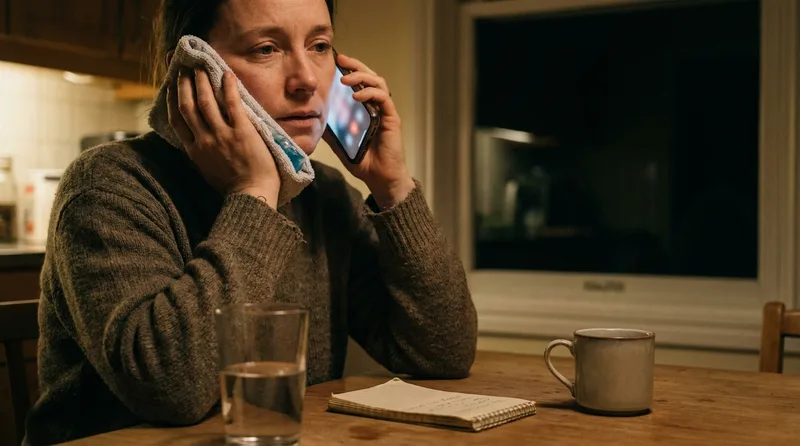
Timing makes this harder. According to the ADA Health Policy Institute, about 70% of hospital emergency department visits for dental conditions happen outside normal business hours. Its research also estimated that 79% of dental-related ER visits could be handled in a dental office instead. Cost matters too: the American Dental Association reports that an ER visit for a dental problem averages $749 when the patient isn't admitted, about three times the cost of a dentist visit.
When to Call 911 Instead
So calling your dental office first usually makes sense. The exception is anything that threatens breathing or general health. Call 911 or go to an emergency room if you have:
- Swelling that spreads toward your eye or neck, or that makes it hard to breathe or swallow
- Heavy bleeding that won't slow down with firm pressure
- A jaw injury or facial trauma after a fall, accident, or sports hit
- Facial swelling along with a high fever
When to Call Your Dental Office Right Away
For a knocked-out or broken tooth, a lost crown, or severe tooth pain without those warning signs, call the office right away. After hours, listen to the whole greeting for an emergency or on-call option before hanging up. Many offices use call routing that separates urgent from routine calls, so naming the emergency early is what moves you to the front.
This is general information, not a diagnosis. When in doubt about severity, call 911.
For practices: send urgent calls to the right person, fast.
See which patient calls an AI receptionist can handle on its own and which it should pass straight to your team.
See what calls AI can handle →What Information Should You Have Ready Before You Call?
Have your full name, date of birth, insurance card, the reason for your call, and two or three times you're free. With those ready, staff can find your chart and answer in one pass, which shortens the call and frees the line for the next patient waiting.
What the Front Desk Usually Asks
Front desk teams follow a fairly standard intake routine. ADA practice-management guidance on patient intake suggests offices ask callers for details like the date of their most recent dental visit and whether they have dental benefit coverage. If you know those answers before you dial, the call moves faster.
Your Pre-Call Checklist
Keep this list next to the phone:
- Full name and date of birth, exactly as they appear in the office's records.
- Your insurance card, with the member ID and group number. If the plan belongs to a spouse or parent, have the subscriber's name and birth date too, since staff often need both to verify coverage.
- A one-sentence reason for the call.
- Your availability, ideally two or three specific windows.
- Your pharmacy's name and location if you're asking about a prescription.
- A callback number you'll actually answer.
Why a One-Sentence Reason Helps
Write the reason down before you call. Sounds small. It cuts the back-and-forth that keeps you on the line longer, and it helps an AI receptionist route you correctly the first time.
Is a Phone Call Always the Fastest Way to Reach Your Dental Office?
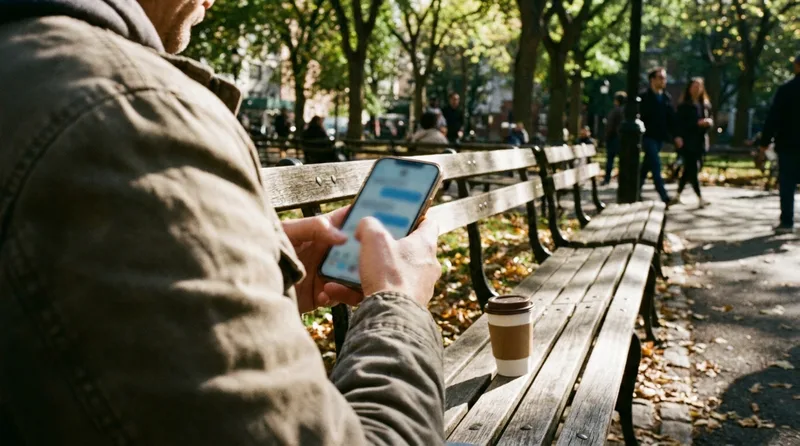
No, a phone call isn't always fastest. For routine tasks like confirming, rescheduling, or sending an insurance photo, a text, online booking link, or patient portal message often gets handled sooner, because staff can answer those between patients instead of only when a line is free.
When a Phone Call Still Makes Sense
Phone still has a strong pull. In a 2022 Northridge Group survey reported by Statista, 54% of U.S. respondents said phone calls are their preferred way to resolve service problems. And for urgent or complicated questions, a live conversation is still hard to beat.
How Offices Use Text, Booking, and Portals
But dental teams increasingly use several channels at once. A late-2025 piece in Inside Dentistry argued that practices need both high-tech and high-touch communication, with routine messages flowing through systems so the team has more time for patients in the office.
| Channel | Good for | Typical speed | Watch out for |
|---|---|---|---|
| Phone call | Urgent issues, complex questions | Fast if answered, slow at peak hours | Holds and voicemail |
| Text message | Reschedules, quick questions | Often within the hour | Skip detailed health information unless the office says texts are secure |
| Online booking | New visits, cleanings | Instant | Not every appointment type is listed |
| Patient portal | Forms, records, balances | Same day to next day | Logins and password resets |
| Callback request | Long hold times | Depends on the office | Answer calls from unknown numbers |
Replying to a Missed-Call Text
Some offices also send an automatic text when you miss them by phone. If you get one, reply there. Missed-call text back often reaches staff faster than calling a third time.
What Should You Do If You Get Voicemail or No Callback?
Leave a short, complete voicemail with your name spelled out, date of birth, callback number said twice, and the reason in one sentence. If nobody returns the call by the end of the next business day, call again in a quieter window or switch to text or the patient portal.
Why Voicemails Get Missed
Most voicemails fail for boring reasons. The number gets garbled, the reason is missing, or the name is impossible to match to a chart. Then staff have to guess, and your message drops to the bottom of the pile. That's one reason dental voicemail loses patients so often.
A 30-Second Voicemail Script
Here's a script that takes under 30 seconds: "Hi, this is Jordan Ellis, J-O-R-D-A-N E-L-L-I-S, date of birth March 4, 1986. I need to reschedule Thursday's cleaning. Please call me at 555-0142. Again, 555-0142. Afternoons are easiest. Thanks."
- Do say whether it's routine or urgent.
- Do mention the best time to reach you, because phone tag eats days.
- Don't leave several messages in a row. One clear message is easier to act on than three partial ones.
- Don't rely on voicemail for anything urgent. Call back, say "emergency," and use the after-hours option if the office has one.
What to Do If No One Calls Back
Still nothing after two business days? Use a second channel. A portal message or text creates a written record, which makes follow-up easier for both sides.
How Can You Tell a Dental Office Makes It Easy to Reach a Person?
You can tell by how the first call goes: the phone is answered within a few rings, any automated system says what it is, and asking for a person gets you one quickly. Offices that return messages the same day usually run organized front desks overall.
Why Offices Add Phone Technology
The bigger picture explains why offices add phone technology at all. ADA Health Policy Institute workforce research estimates that vacant dental assistant and hygienist positions have reduced practice capacity by about 10% nationally. When teams are stretched, an AI receptionist can cover routine calls so staff are free for the conversations that need them. It supports the team. It doesn't stand in for them.
Signs an Office Is Easy to Reach
Signs of an office that's easy to reach:
- Clear identification. An automated assistant tells you it's automated and offers a person.
- A short path to staff. One request transfers you, with no loops.
- Language support. Spanish-speaking callers can get help in Spanish, which a bilingual dental receptionist setup makes possible.
- Same-day callbacks on messages left before mid-afternoon.
- Published after-hours instructions for emergencies, on the website and in the greeting.
Make a Test Call Before You Choose
Choosing a new dentist? Make a test call first. How the phone is handled tells you a lot about how the rest of the practice runs.
The One Habit That Saves the Most Time
The fastest way to reach a human dental office phone team isn't a secret button or a magic word. It's leading with your reason. Whether a person or an AI picks up, one clear sentence about what you need decides where your call goes next.
So before your next call, write that sentence down, pick a quieter time window, and ask for the front desk by role. For anything urgent, say "emergency" first. Those three habits will save you more time than any menu shortcut.
Run a dental practice? Make your team easier to reach.
An AI receptionist can answer routine calls and pass patients to your staff the moment they ask for a person, so fewer callers end up in voicemail.
Explore AI receptionist guides →Want more plain-language guides on calling, booking, and visiting your dentist?
Browse Patient Care articles →Frequently Asked Questions
Yes. Most dental AI receptionists are set up to transfer you when you ask for a person or the front desk. If staff are busy, the system usually takes a message or schedules a callback, and a good one passes along your reason so you don't have to repeat it.
Listen to the full greeting for an emergency or on-call option, since many offices route urgent after-hours calls to a dentist or answering service. For routine needs, leave a short voicemail or send a portal message, then expect a reply the next business day.
No, it isn't rude. Dental offices expect some callers to want a person, and well-configured systems are built to hand you over politely. That said, letting the AI book a routine cleaning is often faster than waiting for a free staff member.
Usually because every line is busy or staff are helping patients at the counter. Some offices also send calls to voicemail during lunch or team meetings. Call back in a quieter window, or text the office if it offers texting, since staff can answer texts between patients.
Texting or online booking is often faster for a simple reschedule, as long as your office offers it. Calling makes more sense when you need a specific provider, have insurance questions, or the change is within 24 hours and might carry a late-change fee.
Two to three minutes is a reasonable limit during a busy window. If you're still holding after that, hang up and request a callback, send a text, or try again mid-morning or mid-afternoon, when front desk staff are less likely to be juggling arrivals.
Often yes for scheduling, but HIPAA privacy rules limit what staff can share about your care without your permission. If someone regularly calls on your behalf, ask the office to list them as an authorized contact on your patient record so calls go smoothly.
Sources & References
- 1
- 2
- 3
- 4
- 5
- 6
- 7
Topics
Was this article helpful?
Written by
DentalBase Team
Expert dental industry content from the DentalBase team. We provide insights on practice management, marketing, compliance, and growth strategies for dental professionals.